Sunday, March 8, 2015

Interview: Travis Collins


Travis Collins will be well known to Australian country music fans. He won Star Maker in 2004 and released three albums, then he seemed to drop out of sight for a while. I saw Travis play live once - just a short set, but enough to leave a deep impression - and became convinced that he was destined to be known far and wide. His new, fourth album, Wired, should certainly help set him on that path. Recently I had the chance to speak to Travis and found him to be a thoughtful, passionate artist whose commitment to music is clear. 


I’ll start off by saying the album is terrific. I only got it a couple of days ago, but I’ve been listening to it on repeat.
Oh, thanks.

It’s a really great piece of work, really well balanced. You can hear your lineages, if that makes sense, and it also sounds like you’re having a lot of fun on it, mostly. Obviously, the last song is an exception. But, was it a lot of fun to make?
Yeah. I kind of threw away the rule book when I went into the studio with this one. The biggest difference that’s noteworthy is that this was the first time I’d produced an album, sat behind that desk and played that role by myself. And, yeah, it was a massive learning curve. I’ve got to tell you, producers are worth their weight in gold. It’s hard. It’s so hard [laughs]. But, I think, I just threw away the rules, and didn’t really try and follow any particular trends as such. I think a lot of people are caught up in trying to guess where country music is going. And I thought I’d just do an album that was celebrating my favourite part of where country music has been. And that was honky tonk music, and the really big rocking pianos, and electric guitars, and songs that mean something. So I went back for that, and I’ve been really, really amazed with the reaction to it. The response has been quite astounding.

Well, as I said, it’s a fantastic album, so I’m not surprised other people are saying that. But, just in terms of your role as a producer, I guess there’s not a divide, necessarily, but you’ve got to, as a producer, look at the songs as how the audience would hear them, and try to create them in that way. But as the songwriter, sometimes, I suppose, that might come into conflict. So did you have any of those moments of thinking, oh, God, I’ve written this song, and I’m not sure if it’s working?
Oh, absolutely, absolutely. And that was the biggest thing about this particular record, and wanting to produce it myself, was that if I was going to be fair dinkum and do that role the way it was supposed to be done, then I had to be mindful and respectful to the fact that, as a producer, I was going to have to make decisions that myself as an artist might not have been super happy about. It sounds, kind of, just schizophrenic to say it like that, but there’s definitely two hats, and you can’t wear them both at the same time. When I selected the shortlist of these songs there were a whole bunch of songs, including my own, that were on the table, and the first thing that I had to really step up as a producer was to admit to myself that the songs that I’d written weren’t on par with some of the other songs that I’d found. And this album doesn’t feature a single one of my own writings. And that was hard to do as an artist. But, as a producer, I think the album is better for it, because I just couldn’t convince myself that the songs I’d written were up to the standing of the ones I chose. And so I had to be real with myself about that, and just make the greatest album that I could with what I had. And that meant taking a few punches as an artist [laughs] from myself as a producer.

Well, absolutely. And I would think it would be quite a confusing process, in some ways, because, obviously, you’ve been writing songs for a long time, and you’ve had success at it – and those songs are still there now. So what happens to them?
I don’t know what happened creatively, but once I made the decision to run with these 11 tracks, subconsciously the writer part of my brain has just switched on since then. I don’t know exactly what it is, but something happened by not choosing a single one of my own songs for this record, that the writing side of me is absolutely switched on now. So it’s really, really flicked a switch somewhere, and I can’t wait for the next thing. I’ve just been writing ever since the final few sessions of Wired, writing things on the back of anything, whatever’s in front of me, a napkin, or a business card, or set list, I’ve been writing songs everywhere.

It’s something has happened to your creative flow. You’ve managed to step onto the wave and start to ride it to the shore.
Absolutely. And I think this album, Wired, has been a real good direction for me. And maybe that’s what my writing was missing before. And up until this album I didn’t really know what I was trying to be as a style, or what my niche was within country music. And I think taking a break away from my own songs, and just really focusing on building what I wanted ‘Travis Collins’ to sound like, it has really helped my songwriting side go, okay, well, cool, I see what I’m doing now. And since then all this stuff has been coming out.

And you’re still young. So I think you won Star Maker when you were 19. And that wasn’t that long ago. So this could be part of your maturation as an artist, finding out what your identity is and who your audience is.
Yeah. Star Maker feels like a lifetime ago. It’s been the greatest of ten years – ten or eleven years now – but, yeah, you’re absolutely right. And sometimes figuring out who you are is – as a person, and who you are musically are so tied together that you don’t even realise how close they are. But this whole process of Wired – the metaphor of Wired is me coming out of my independent days, and plugging back into a label, and plugging into a manager, and really just having the biggest throw of the dice that we’ve had yet. And that was this album. And so Wired became more than a concept about me and the people that support my music, and being connected. It became me and the industry getting back into being connected. So the last couple of years have all been about that metaphor of getting wired, and feeling connected to things, and having a team around me. And I’m really looking forward to not only the release of this record but where these relationships go in the next few years.

I have to say, and I will be frank, that it seems like you’ve been quiet the last little while. I saw you play at a Warner Bros party at Tamworth a few years ago – I’m trying to remember which year it was – and I just thought you were amazing live. This was before McAlister Kemp but that kind of big audience that McAlister Kemp gets, and the big performance you had even at The Pub. And I thought you had a sound that could really fill a huge space. Then you seemed to go a bit quiet. And I was thinking, Where has he gone? This guy should be hugely famous. So, obviously, it has been a bit quiet.
Yeah. And thanks for that compliment. I remember the gig you’re talking about too. That was – it was an ABC Warner night. But you’re absolutely right. I did my first two albums at ABC Music. And then I had a management deal fall apart around that time. And I lost a lot of faith in not only the people around me, I lost a lot of faith in what I was doing. And I started questioning if it’s the right road for me. I spent the first couple of albums recording songs and doing things the way that I thought people wanted me to do them, and not the way that I actually wanted to do them to make a difference. So the third record, which was a self-titled thing, was really just me stepping away, and really doing a bit of soul searching. And that album I wrote a lot of the songs, and it was a process of me trying to find out, frankly, if I loved it, if I wanted to do it forever. So I thought, let’s just cut all the trims off. So for three years there I was without a manager, I was without a label. And I recorded an album completely independent, and just toured around, and sold it, literally, out of the back of the car. And that really reconnected me with no other distractions but music. All I had was music. I didn’t have big deals going on. I didn’t having touring going on. I just had music and different people responding to it. And it really taught me to love it again. So when I went into the studio with Wired, at the very start it was the same sort of idea. I didn’t have a label. I didn’t have a manager at the start of this. I went into the studio and recorded these songs, and then I made a few calls to certain people, and got told ‘No’ a few times. But I was standing in the right room at the right time, and chatting to a guy who gave me his business card, which led to another person. Then it’s – we’re ready now to release, and I’ve got this great team around me, and I’m feeling better about my music, and feeling better about where I’m positioned that I ever have before. And just so much more in love with music, and country music particularly, than I’ve ever been.

And that definitely comes through on the album. It’s related to you sounding like
you’re having fun, but it also sounds like you’re in command. And those two things sometimes don’t go together. Someone’s who’s having too much fun can sometimes [laughs] be a little loose on the recordings. But this one definitely sounds like you know your own mind, and, I guess, that comes back to you being the producer as well.
I guess, it comes down to the song selection. And you’re dead right, because I’ve found a lot of songs, and some of these I’ve been sitting on for quite a while, and the songs on here like ‘Million Dollar View’, if you’d asked me when I recorded my first two albums what a ‘million dollar view’ was I would have said, ‘A big mansion with a couple of Ferraris sitting on the driveway, and looking over the French Riviera’, or something like that. But now I’m older, I’m married, and I’ve got a little house in the country, and it’s a life that I just love, a life that I’d die for and it’s basically, it’s a little house, it’s a Mazda and a Ford sitting on the pebble driveway, a couple of dogs running around and a beautiful wife. I look around, and that’s the kind of stuff that country music is about. And that’s what this whole process, and this album, have been about. It’s growing up and realising that – it’s singing about the universals of everyday man and woman. And the ‘Million Dollar View’ is one example on the album that – I think I’m more connected to country ideals, and what country music is now. I don’t think – I don’t think anyone really – I know what I’m trying to say here –

No, no. I understand what you’re saying [laughs].
It’s a hard one to explain, but I feel a little more qualified to sing about it now that I’ve – the last six years I’ve been out of Sydney, and living a small country life, and I feel like I get the people, and [I’m] somewhat qualified a bit more than I used to be about it.

And it’s a huge part of the genre, I think, understanding that relationship with the audience, because it is such a loyal audience. I like to think of Australian country music as our national storytelling in song. I think it’s really important. It’s culturally important, and I think country songs and country artists have so much meaning for so many members of the audience. And you only have to be in Tamworth and see the looks on people’s faces to understand that – what that means to them. So to be able to feel that yourself as an artist is critical to your career longevity, but also, I think, for it to have meaning for you.
Definitely. And you’ll hear a lot of artists say it, but it’s such truth that all we ever want to do is get on stage and sing, even better if we write. But all we want to do is get up on stage and sing a song that the person down in the crowd can say, ‘Man, it feels like they wrote my life.’ And with Wired all I wanted to do was not try and analyse it or be too tricky with it. Like I said, I sort of threw the rules out the window, and instead of going, ‘Okay, well let me study country people and write about country people –’ six years ago I moved out of Sydney, I thought, you know what? I’m going to live the life of a country person. And that was nothing to do with my music, it was just where I was in my life. I made that change. And then suddenly it’s time for this album. I went into the studio and thought, I’m going to write a song about my life, and maybe it will relate to country people, and it has, which I’m just so blown away by, because one of the greatest gifts you can get is when people contact you and tell you what one of these songs meant.

Now, the next question you don’t have to answer, but it has just occurred to me while you’re talking to ask it of you, which is: do you think you won Star Maker too young?
It’s a tough one – it’s a tough one because, I don’t know, everything sort of happens at the right time in one way or another. But I wish I knew about recording and more about myself stylistically before I’d won it. So yes and no in a way. I see a lot of people come along and walk away with that fantastic opportunity and really don’t know what to do with it. And I was the case that I didn’t know what to do with it, had no idea, but pretty quickly was surrounded by a label, and a management, and agents, and all that sort of stuff. But I look at everything up until now in my career as an apprenticeship, and Wired being my first commission as a serious work. And I don’t know if that’s disrespectful for the previous stuff that I’d done, because at the time, when I was learning and going through those previous albums, they were the greatest works, at the time, that I could have made, but you get to the age of 30 and you look back with a bit more of a level head, and a bit more of an understanding of who you are as a person. And suddenly it feels like you’re holding the greatest thing that you’ve achieved yet. I don’t know, maybe we’ll talk in another 10 years and I’ll tell you what a rubbish album Wired was [laughs].

[Laughs]. Oh, no. I don’t think that’s the case. I’m a pretty hard marker and I wouldn’t have covered this if I didn’t think I could say lovely things about it, because I feel like I want to be in the business of encouraging people to buy music, not discouraging them.
Oh, now that’s so great to hear you say that, because one of my big [things] lately is –on my personal Facebook account I scroll around, and obviously I’ve got a lot of media friends, and industry friends on there, and the amount of people that I see just bitching about what’s bad out there. I constantly call them or text them and say, ‘You’ve just wasted an opportunity to talk about what’s good out there.’ So thanks for that.

The more I learn about Australian country music, and the more albums I hear, and people I talk to, the calibre of material we have here is so high – or the calibre of not material, but the songs and the artists is really extraordinary. And I think that’s an important part of, as I said, our national culture that the people need to know about. And I have actually found that at least half my readers now are in the US, so there’s obviously something about Australian country music that’s appealing overseas, or that people want to know about. And I think it is that the standard is just incredibly high.
I agree. Some of the stuff that’s coming through our ranch here is, one, exciting and, two, scary for me, because I know there’s a just a matter of a few years before they rise up through the ranks and drive my career into the footpath [laughs], but it’s really exciting. And I think worldwide, as a trend, a lot of music is becoming stagnant at the moment, and it’s not just country. A lot of different genres are getting a little too stuck in what they’re doing, and everyone is following the same herd. And I don’t find that Australian country music is. I think we’ve still got that genuine culture about us, and I think that’s really important to hang onto. And it has been forged and etched by so many legends before us just to keep – while we can be influenced by American music trends we’ve really got to keep that Australian dream alive. Like I said, one example, with ‘Million Dollar View’, and that comes from an American songwriter, but I think it really adapts here, and it sits well on this record because it’s talking about what everyone just wants to find, and it’s home, and it’s family, and it’s love. And, at the end of the day, that’s country music.

Yes. But just to go back to your comment about your career being driven into the footpath, I think another good thing about country music is that there is room for everyone, if you’re great at what you’re doing. Now, you’re already great at what you’re doing. So if you hold this path steady then there really is room for everyone, and also it doesn’t matter how old you are. So I think that’s the other thing. You can be 60 and starting your career in country, and the audience is quite happy to have you. Or you can be 60 and still playing, and they’re happy to have you.
Yeah. You know what I think? It’s also because one thing with country music is we’re so lucky that we end up in a scenario where we’re blessed enough to pick up a couple of new fans, country fans, they won’t stay with you for an album, or a single, or a tour, they’ll quite literally grow with you. They’ll get old with you, and they’ll follow your music into their later years. And it’s also a form of music that’s about feeling something and, like you say, it’s storytelling. And country music is about characters. Some of us are pretty rough looking. And some of us probably aren’t as thin as what some of the pop star counterparts are, but we get onstage, and the whole thing is really just about trying to make the person listening feel something. And I think that’s why we are so fortunate to have longevity with our fans, and our careers. I try not to overthink it too much, but that’s as far as I can attribute it to.

Speaking of Australian legends within the genre, and also longevity, you went on the Brian Young tour, and that’s, kind of, an arduous experience from the sound of it. You’re travelling around to a lot of places. Sometimes they’re not easy to get to. Was that a formative experience for you?
Oh, yeah. I’ve got to give credit to Troy Cassar-Daley, because the best line I’ve ever heard explain what a Brian Young tour does came from the mouth of Troy Cassar-Daley, and that was he said he went out on the tour as a young boy and came back as a young man. And I think that really, really ties it up. Because it’s – you’re not only out there learning about the music industry, and the dos and don’ts, and how to make money, and how to stick to a routine, and logistics, and all that sort of stuff. You’re really learning about life. And it’s tough days out there, but you have really good days as well. Being beside Youngy, he’s always constantly trying to make you a better gentleman. He could swear like a sailor when there were no ladies around but the minute there was he’d just as quickly clip you around the ear for dropping a rude word in front of a woman.

[Laughs].
It was probably the best three months that I’ve ever had on the road in hindsight. And it’s crazy to say that now, because as the time I was just out there thinking, Oh, man, we’ve got to drive 800 ks today and play to 14 people in the middle of nowhere. But I didn’t realise at the time what I was learning. And what we were doing for those people out there in the bigger picture. And people would come in from cattle stations and farms that were 600 kilometres away. Some of them would drive as far as we did that day. Because for that one night, or the couple of nights that we were playing at that rodeo, or wherever it was, they could come in, and they could forget about their stock dying because they didn’t have enough feed – they didn’t have to worry about something for a couple of days. They could just come out and have a few rums, and listen to country music, and just be around other people for a change instead of being isolated, working, stressing, worrying. And I thought, You know what? That’s probably the most important lesson I’ve learnt in my career. And it holds to date. And that is it’s not just music, it’s an escape for people. People can come. And if you can sing something that hits them in the heart that they relate to, like I said, if you can have them stand there and go, ‘That guy’s singing my life.’ I remember the times that I hear a song and I think, That guy’s singing my life, or that woman’s singing my life, and it’s an unexplainable feeling. But when you can do that it’s quite affecting, and it’s something that just keeps me inspired to be out there doing it year after year, and it’s why I’m still here doing it now.

It is a really important job. Storytellers have an important role in the culture, and country music artists have a way of delivering stories, and providing escape, and providing reassurance to their audience in a far more direct way than other people, because you are willing to go to places that not a lot of other storytellers go. And it is a critically important role, I think.
Yeah, absolutely. And, I mean, country music – we’ll talk about the things that probably aren’t cool to talk about. And there’s a song on Wired, the last track is a track called ‘Lost and Uninspired’, and that was the one take in the studio – and I don’t say that as a brag, I say that because that’s all I could literally do. I heard this song on the 2nd of June, 2013 for the first time. And it was a song just about heartbreak – it was a male singer talking about a woman that left him. But, tragically, two days later I accepted a phone call, and I had to sit my wife down and tell her that her father had given up to depression and had taken his own life. And I didn’t listen to the song, or hear the song, for maybe another four weeks. But I tell you what, when I did put it back on and heard it again it spoke to me on a whole another level. And I just can’t help every time a get onstage now but come from that place now, because that was my experience with the song. And as you say, we go to some dark places, but I sing the song, and I tell that story, as hard as it is, when we tour, because I think suicide and depression are at just staggering rates in Australia, and we need to start talking about it.

Particularly in rural Australia.
Especially rural Australia. Like, where I’m talking about – places like out where I was with Youngy, and a lot of the places you don’t even have to go that far out. I mean, I’m an hour from the coastline here in the Hunter Valley, and it’s happening everywhere. It’s happening right beneath our noses, and we don’t see the signs, because, for some reason, Aussie blokes are told men don’t cry, and we grow up not sharing emotions. And it’s just absolute bullshit. So a part of the responsibility of being in front of people, and singing songs, and trying to touch their heart is to teach them that it’s okay to talk about things. This is my experience, and I want someone else to be better off for it, so this is why I’m sharing.

Speaking of going on the road, are you – no doubt you are planning a tour in support of this album. I don’t have dates in front of me, so this is your opportunity to say where you’re going to be and when.
Well, at the moment we’re focusing on just the few key festivals. I don’t really see us doing the road touring with this one until the last half of the year, maybe August onwards. But, to be completely honest, I’m having a meeting with my manager and agent next Thursday and we’re going to discuss our mud map and figure it out then. But as of right now everything has been about releasing the music, and getting it out on radio, and getting it talked about before we even look at getting on the road.

The conventional wisdom would probably be that you’ve got to promote on the road as soon as the thing’s released, but with country music people will turn up whenever you’re there, I think. So you’ve got time to do that.
I guess so. And we’re so fortunate to have a network of touring, and a network of festivals that we have. We’ve got our own Foxtel channel, which really helps, and there are hundreds of community radio presenters across Australia that do country music. There’s a few commercial stations as well. So we’ve got that infrastructure. And I don’t think we need to go out right at the time of release. Just play those few key events, and try and reach new fans. But I’d like to think we could probably get two, or the third single out of this album before we try and hit the road.

So the first single is ‘Curves’, and you could probably choose any one of the other 10 songs on there to release.
Oh, thanks, mate. I really appreciate that.

It’s true. It’s a really great album. I’m still exploring the nooks and crannies of it because that happens, I think, with albums. You put it on the first few times and there’s certain impressions of certain songs. And then the longer it’s on the more you find in it. But I think there is a lot more to find, which is always great for a listener to have multiple layers of meaning in the song.
Absolutely. Even though the production process was a couple of months long, it feels like it was a flash in the pan in the whole context of it. And so I came out of it a little bit scratched, and a little bit tired, and then when I get the master in my hand, go home and listen to it fresh and ready to hear it, I hear things for the first time as well each time that I listen to it. And it depends on what stereo I listen to it on, or where I’m listening to it, but I’m really glad it has got that aspect to it. But it’s such a credit to the engineers and the musicians that I had on it too. But I’m really, really happy, and so proud of this work.

 Wired is out now through ABC Music/Universal.

Tuesday, March 3, 2015

Interview: women in docs in Tamworth

During this year's Tamworth Country Music Festival I had the pleasure of interviewing live-in-person some people I'd only ever interviewed by phone. One of these people was Chanel Lucas from women in docs, and as her longtime collaborator Roz Pappalardo was with her, I spoke to the full complement of women in docs.

Although Tamworth is over, its influence is felt throughout the year - as we discuss in this interview. So that's why I think it's appropriate to publish this interview now, and the rest will come soon.


So you’re playing with the Bushwhackers at the Longyard Hotel – the Longyard as a venue, talk me through it.
Roz: When we used to come here regularly, that was our regular show. We’d do sets there. It’s an audience that really loves their country music – a specific style of country music. Very attentive, very involved in the show. Certainly a different audience to a lot of other bars and pubs around.

That’s not what I would have thought of the Longyard.
Roz: This is the back in the big space, and that audience is very well trained.
Chanel: And they’re quite into songwriters, which is what we’re all about, so we go quite well there.
Roz: We’ve never played the front bar of the Longyard. Probably not our cup of tea. [But] good for the bands that do it.
Chanel: Great exposure for them. And they have the songwriters awards there, in the back bar, so there’s a —
Roz: Culture.
Chanel: Yeah, there’s a culture of songwriting.

This is one of the fascinating things about Tamworth, that one venue can house quite different spaces and things going on at the same time.
Roz: And it’s good that that venue has developed that, so it’s got the front bar for the drinkers and the partiers and the back is for the music connoisseurs.

So what was your first Tamworth?
Roz: I can’t even remember.
Chanel: I don’t know.

If you can’t remember if must have been a good one.
Roz: Oh, it was hellish [laughs]. I just think the same thing happened – we got invited by a bunch of bands to come and do special guest spots so we thought we’d make a week out of it. It was like us and two other acts, and we were all just dossing in one motel room. And Peel Street back then – this would have been ’04, ’05 – was even busier. There were more acts. I think it’s died down the last ten years.
Chanel: No, I don’t think it’s as big – well, there’s not as many buskers. It was a busker every two metres.

I didn’t go in 2013 and that was the year they apparently used an audition system for buskers and the numbers were down that year. Maybe they’re only just starting to come back up.
Roz: That makes total sense.
Chanel: I didn’t know they did that.
Roz: We were talking about [how] it seems like something like that had happened. Because it’s not as wild and crazy down there on Peel Street now. It’s a bit more tame.
Chanel: And the quality of artists is so good out there.

Last year I noticed that I was not hearing ‘Folsom Prison Blues’ every five metres – you used to hear that.
Roz: No. The song yesterday was ‘Ring of Fire’.
Chanel: I’ve heard ‘Jolene’ and [singing] ‘May the Circle Be Unbroken’. I’ve heard that at least four times.
Roz: We could actually release a top ten hits of the buskers.

It would be a good survey … you two could make a list of the songs and cover them, is that what you mean?
Chanel: Yes. And we’ll record an album with all those songs on it.

Different interpretations.
Chanel: We’ll sell it on Peel Street.

And then you don’t have to busk. You just have to press ‘play’. Some people do use a backing track, after all. Having said that, there are some genuine musicians on Peel Street …
Roz: The quality is quite high this year.

There’s the young people having a go and older people having a go too.
Roz: It’s awesome. That’s what I love about Tamworth – they really foster and nurture that young generation. Young girls, young boys – they’re supportive, give them platforms to present, help them write the bio, helo them get professional publicity photos taken. That doesn’t happen in any other genre. Country kills it in that world and it’s such a great opportunity for these young people to get a great professional start in their music career. Love it.

I think as a genre as well it does respect the songwriter more than any other genre in Australia.
Roz: It does.

And I don’t know if I remarked on this to you, Chanel, in the past but I’ve certainly noticed the even spread of male and female artists throughout the festival.
Chanel: Yes.
Roz: That’s true. It’s just quality, really.

And the nature of this festival is such that the competition’s so stiff – busking’s one thing, but there’s a lot of free gigs here and you want to get people to them to buy your albums and you have to be good. So the quality of music that comes out of all the performers in this festival is extraordinary.
Chanel: It is.

And you guys are part of that, of course. The level of talent under the country music umbrella, which is broad –
Roz: It’s getting broader.

It’s quite amazing.
Chanel: We met a few people today when we were playing down at Fanzone who – it’s their first time. And I said to a couple of people, ‘What are you going to see? What are you going to do?’ And they just said, ‘We don’t know – it’s so overwhelming. We’re just walking around – everything we watch is good. Everything we see is amazing.’ And all they’re doing is just walking around to see what happens.
Roz: You get that big programme and I immediately get a panic attack. I just looked at it the other day – and I think I was really tired because we’d been up since five-thirty driving, we had a 7 a.m. interview – I looked at it and I nearly felt like breaking into tears because I just didn’t want to miss anything. You know what I mean?

I absolutely know what you mean.
I was like, ‘Oh my god, this is just too much.’ [But] fantastic, because there’s something for everyone.                 

So for you as performers, you have quite a schedule. Do you have your fallow times during the day when you can have a little rest?
Roz: We try to.
Chanel: We’ve had one in three days. Four days. How long have we been here? It feels like we’ve been here for, like, a century.                  

And you’re on tonight.
Chanel: Late nights up at the North Tamworth Bowlo there’s like a fringe thing, so tonight’s girls’ night, with all female performers, and tomorrow night will be bluegrass night and so on.

And the Lifeline concert.
Chanel: I think it’s now called ‘Country Music Cares’ or ‘Country Cares’. At the Town Hall. And all the proceeds are going to local farmers.

That’s a good thing to be invited to participate in.
Roz: That invitation and the Bushwhackers invitation actually got us here. We thought, ‘We’ve got this gig and these gigs, let’s make a week of it.’ And then Matt Henry has come in and invited us – we’ve been working with him on –

You’re going to be at the Tudor up late?
Roz: Thursday night. It just takes a couple of invitations to then put together a week.

I know for you two – because you don’t live in the same city – it’s a matter of finding that momentum to pull everything together.                 
Roz: It’s coordination but we’ve been doing it for so long now that it’s a matter of getting on a plane for me – or for you [to Chanel]. Air travel is so easy these days – do it a couple of times, get lots of Velocity points.                 
Chanel: And this is such a big festival, you almost have to do at least a gig or two a day just to reach –
Roz: Unless you’re Kasey Chambers or Troy Cassar-Daley.

Well, yes. And that’s a different kind of music, too. Roz, your name came up recently because I interviewed Leanne Tennant.
Roz: Yeah, she’s from Cairns. She’s great – a really amazing chick and she’s on her way here now.

So in Tamworth, part of the benefit of it seems to be these relationships that get made – whether it’s producers, songwriters, musicians. Has that happened for you in the past?
Roz: At this festival? For sure. The nature of this festival is that you generally collaborate – play with three or four artists on the bill and that’s how the relationships are built. That feeds into other touring, other networks.
Chanel: Other festivals. We’re doing a show with Lou Bradley – she’s going to come and do some songs with us at the Family [Hotel show]. She’s involved with some stuff down in Murwillumbah.
Roz: She started it.
Chanel: She started a new festival down there.
Roz: A country roots festival.
Chanel: She’s invited us to come and play at the end of next year down at the new country roots festival … It’s a small industry.

The impact of this one festival – and I don’t know if there’s anyone to quantify it, actually – but creatively, commercially in terms of the albums that come out of it, is quite enormous.
Roz: It would be a really good study to do that. But how you would do that …                 

[Laughs] Tamworth Council would probably want to do it.
Roz: Well, it would actually be great for them, funding wise.


The latest women in docs album is Carousel. Visit them online at womenindocs.wordpress.com.


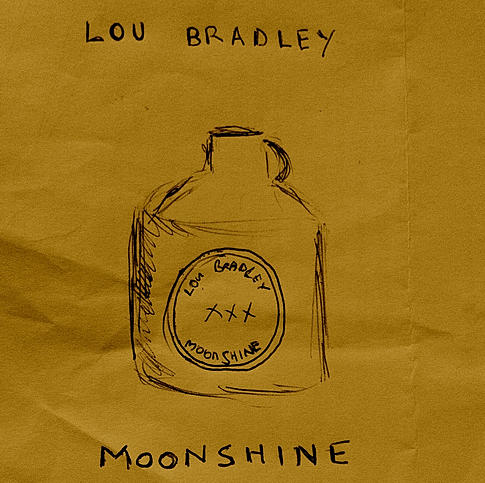
Review: Moonshine by Lou Bradley


On the back of Lou Bradley’s new album it is written, This album was recorded live at Bill Chambers’ house. Just Bill Chambers, Phillip Chaffer and me, sitting in a circle playing my songs. No bullshit! And that’s a promise kept: there is certainly no bullshit on this album that is full, instead, of poignancy, heart, sadness and the occasional bit of wonder.

Moonshine is dedicated to Bradley’s father, John, who died in April 2014. The album seems shot through with grief for him, but it’s the sort of grief that is always tinged by the happiness of having known someone so well and loved them so much. Consequently there are many joyous moments in these country-folk songs that are simply executed – just Lou, Phil and Bill, as Bradley says – but so layered that they unfurl over repeated listenings and take root in the listener’s brain.

There are stories of Bradley’s life on the north coast of New South Wales – ‘Washed Up Hippy’ and ‘I Like it That Way; a song about the magical impossibility of love (‘Like Making Water’), about the depths of life (‘Wild’ and ‘Winter Blues’) and about her parents ('Cheers Barbara', ‘You Were Always There for Me’). Ten songs in all, and all gems.

Bradley’s voice is a strong instrument that is allowed to be vulnerable from time to time, always within Bradley’s control even at the points where sadness is present. It is unpretentious and unself-conscious and, in so many ways, adorable. The unadorned production on the album is what’s needed to keep that voice and its stories at the forefront throughout.

In the last song, ‘You Were Always There for Me’, Bradley sings, ‘I’ll be standing here with my heart wide open/There’ll be no closing this heart any more’. This is a brave statement, and it speaks to that combination of strength and vulnerability apparent in her voice. It’s also a description of this album: open hearted, generous, warm and welcoming. It deserves to be welcomed in return.

Moonshine is out now.

Monday, February 16, 2015

Album review: These Wilder Things by Ruth Moody

Ruth Moody’s album These Wilder Things was released in 2013 but online all things are eternal … or, at least, I can allow myself an extended deadline to review the album, given that Moody is Canadian and she’s only just touring the album here now.

As with so many albums I fall in love with, it’s taken a while for this review to form itself. Language – perhaps just the English language – can seem too limited to describe an emotional response to music. Music itself seems to be the only language appropriate enough to express that emotion. But I can’t command music the way Moody can, so I’ll do my best with the written word.

These Wilder Things seems composed of elegance and sky, yearning and directness. There is space in these songs – space for the listener to sigh with the beauty of it all. This is especially true of the title track, which seems like it could be played as accompaniment to an epic journey on the prairies as much as a journey to the interior of oneself.

Moody’s voice is strong and sweet, never letting sentiment become twee. The instruments supporting her voice are restrained and, well, perfect. It’s pretty much a perfect album. Even Moody’s choice to cover Bruce Springsteen’s ‘Dancing in the Dark’ seems to fit perfectly, providing a jaunty counterpoint to Moody’s own cadence, which is a little slower.

Moody was born in Australia yet we can’t really claim her – not just because she’s lived in Canada most of her life but because this album is redolent of the place where she grew up: the space of those prairies; the respectful, rather than habitual, politeness of Canadians; the independent music scene that stretches from coast to coast across that massive interior, picking up influences with an alert curiosity and half an ear on a rich musical past that has marked Canadian music for decades. That’s a lot for one album to hold; Moody is more than capable of it, of holding the past and future in each hand and standing fully present between them.

These Wilder Things (True North) is available now.  


Ruth Moody is touring Australia. For tour dates and to read a short interview with her, please click here.

Monday, February 9, 2015

Interview: Ruth Moody

Many moons ago, I spent a year living in Canada. During that time I came to know and love a lot of great Canadian music - and so much of it is really great. So if you see the odd Canadian on this blog, that's the reason: I'm always willing to listen to Canadian music. And never more so than in the case of Ruth Moody, whose album These Wilder Things is a work of incredible beauty. Ruth is about to tour Australia, and she answered a handful of questions by email ahead of her arrival.

Canada has a robust indie music scene. For a while Halifax was the epicentre but the prairies are producing fantastic music. What's the music scene like in Winnipeg? 
Winnipeg is a great town for music. I don’t know quite what it is - whether it’s the cultural diversity or the fact that the winters are long and harsh, and buckling down with music is one way in which people are able to cope. Whatever it is, it’s a thriving scene. There is a lot of cross-pollination between genres too, which is cool. There are also two great organizations in Winnipeg  that offer support and resources to artists right from when they are first getting started to later on in their careers. It makes a huge difference. 

You're holding a banjo in a photo in your CD - is the banjo your first love as an instrument?
I do love the banjo. I actually haven’t been playing that long - my first instrument was piano and or course voice, but in the end I didn’t follow a classical path with either of those. I started playing guitar in my mid-twenties and then banjo a couple of years after that. I think the reason I love the banjo so much is that it doesn’t hold any emotional baggage for me. And it is ridiculously fun to play - I highly recommend it. 

Why did you choose Bruce Springsteen's 'Dancing in the Dark' to cover? 
I just learned it one day for fun - I thought it would be cool to put a folky spin on it, and also thought it was interesting to think of the lyrics from a female perspective. When I brought it to the band and everyone added their ideas, it kind of ended up taking on a life of its own, and we knew we had to record it.

Coming back to Australia, does it feel at all like a parallel universe? If your parents hadn't decided to move back to Canada, you could be playing Tamworth every year …
Well I don’t actually know about Tamworth, but it sounds like I should! Sign me up! I’m really excited to come back to Australia. I do sometimes wonder who I’d be if I’d grown up there - I’d certainly have more of a tan, I reckon. I have a lot of Aussie relatives, and I’ve been back several times, some of them particularly formative times in my life, so I feel a very strong tie.


Ruth Moody in Australia

Thursday, February 19th Marrickville Camelot Lounge
Admission: $25/$30. 
Address: 19 Marrickville Rd, Marrickville NSW 2204. 

Friday, February 20th Milton Milton Theatre
Admission: $34. 
Address: 69 Princes Hwy, Milton NSW 2538. 
Venue phone: (02) 4454 3636. 

Saturday, February 21st Candelo Candelo Town Hall
Admission: $20/$25. 
Address: William St (Cnr Eden St) Candelo, NSW 2550.

Sunday, February 22nd Yackandandah Yackandandah Town Hall
Address: High Street, Yackandandah.
Wednesday, February 25th Ararat The Red Room

Thursday, February 26th Adelaide Trinity Sessions @ Adelaide Fringe
Admission: $33/$36. 
Address: 318 Goodwood Rd, Clarence Park, Adelaide, South Australia 5034 SA. 

Friday, February 27th North Fremantle Mojo’s
Admission: $25. 
Address: 237 Queen Victoria St, North Fremantle WA 6159. 
Venue phone: +61 8 9430 4010. 

Saturday, February 28th Nannup Nannup Music Festival
Address: Lot 31 Warren Rd, PO Box 216 Nannup WA 6275. 
Venue phone: 0897561511. 

Sunday, March 1st Nannup Nannup Music Festival
Box office: 0897561511. 
Address: Lot 31 Warren Rd, PO Box 216 Nannup WA 6275. 
Venue phone: 0897561511. 

Wednesday, March 4th Carlton Melbourne Folk Club
Admission: $28/$30. 
Address: Bella Union Trades Hall 54 Victoria St, Carlton VIC 3053. 
Venue phone: 03 9650 5699. 

Thursday, March 5th Oakleigh Caravan Club
Admission: $28-$35. 
Address: 95/97 Drummond St, Oakleigh VIC 3166. 
Venue phone: +61 3 9568 1432. 

Friday, March 6th Geelong Port Fairy Folk Festival
Box office: 03 5568 2227. 
Address: Geelong VIC. 

Saturday, March 7th Geelong Port Fairy Folk Festival
Box office: 03 5568 2227. 
Address: Geelong VIC. 

Sunday, March 8th Geelong Port Fairy Folk Festival
Box office: 03 5568 2227. 
Address: Geelong VIC. 


www.ruthmoody,com

Thursday, February 5, 2015

Interview: Rose Carleo

I've been listening to Rose Carleo's music for a while but only recently had the chance to interview her for the first time - and was so pleased to have done so. She's a talented, passionate performer and songwriter and she was a delight to interview. Her new single 'Time is Now' is out now, with an album to follow in March.

Your mother was a country music promoter, and so I was wondering if you had any option not to go into country music when you were younger?
[Laughter] Well, look, she was such a big fan of all music, but especially country music. So she loved her favourite bands, and loved country music especially, so when she had the opportunity, she started a country music club and we'd also started a kids' country music club to help promote and to nurture young talent, and we'd enlist the help of experienced musos and things to come down and mentor them and things.  So, yeah, I probably didn't really have a choice as such, but I just loved the stories and the lyrical content, and it was, like, wow.  And I'd find myself at 12, 13, 14, listening intently on what was going to happen next; was he going to end up with her [laughter] – probably one of my favourite country songs in the world is George Jones's 'He Stopped Loving Her Today', and I remember crying when I heard the end of it.  I was bawling [laughter].

It's a very sad song, that one.
Yeah, and it is such a great song.  So I probably didn't have a lot of choice, but that's all good [laughter].

As you were young and getting exposed to these sorts of influences, had you already started singing by then?  Did you know you had a voice, or did that spur you on to start?
Oh, look, it spurred me on.  I played the lead in a school production when I was in Grade – I think I would have been Grade 4 maybe, around that time, and I went for the lead and I didn't get it, 'cause I was always probably the loudest singer, and so I just loved it. No one told me I was good or bad or anything, I just loved it, so I didn't care, I sang at the top of my lungs.  But they gave the lead to another girl.  She was probably a bit quieter, and I think, in hindsight, they probably gave it to her so she would come out of her shell a bit more, but what happened was she fell sick – and I didn't do anything to make her sick [laughter], she had the flu, I think – and I was devastated I didn't get the lead, and then they said, "Well, you know, she's sick" … So I got to do the lead.  But other than that, it was probably when Mum had started the first sort of country music club, she approached the pub and said, "Well, can we have this resident band?"  And basically, the pub paid the band, we got the people in, and one of the regular walk-up artists we had a barbecue with the night before, friends of ours, and we were having a good old sing-a-long, and of course, me, I was thinking I know the words to that, I'll sing that.  And he called me up the next night to sing, and I just looked at Mum – I was allowed to go 'cause I'd done my homework, see.  It was a Thursday night [laughter].  I was 13, and back in the day you were allowed to do that, and he called me up to sing a duet, and I looked at Mum across the table and shook my head.  I said, "No, you're not getting me up there."  And she just turned around to me and she said, "I dare you" [laughter].

Well, they're fighting words.
Yeah, I reckon.  Then I terrorised all the bands in Perth after that [laughter].

So do you mean you just performed consistently from that age on?
I just realised I really loved to sing, and I really wanted to pursue it, and I practised – I'd come home from school every day, grab a drink, go in my room and practise until dinner. And then if we'd go to see bands, they'd get you up to have a little sing, and it was years ago now, so it's when kids were allowed in a pub with an adult, and things like that.  And then, I guess, another reason Mum started the kids' club too was [that] I was the MC – I was 15 or 16 and compering a little kids' Country Music club, and trying to help kids, and I've actually just finished judging for the Western Australian Country Music Awards. And because when I was 15 or 16 – I'm trying to remember what year it was – I won the Encouragement Award; it was one of the first years, mid‑'80s, and I always wanted to help young talent, anything I could do, because I obviously had help from older people mentoring me.  So I've judged the last couple of years. And I tell you what, some of the talent – or all of the talent, but some of the young ones, my goodness, and it sounds silly, I almost get teary, but knowing that there's so much young talent out there, and being from WA too, it just really makes me feel good that it's alive and well.

It probably doesn't look like there was a direct relationship between your mum's kids' country club and this sort of thing, but I often think that those things boil away in a culture until change happens, and what I see across country music in Australia is that the standard is so high that everyone wanting to come into it has to be very professional from a very early stage, and so I think all those little things that happen, like your mum's club and other things – and even having awards that children and young people can enter – they have to be professional, and that means it's great for the audience because they get this whole raft of fantastic artists, but the standard is so high.
For sure.  Absolutely.  And I'm teaching a few kids singing at the moment, and we've spoken about going down the track of talent quests and all that kind of stuff, and I've said to them, "If you want to, that's okay, but it's not the be-all and end-all, and at the end of the day, it's just opinions of the judges, it doesn't mean you're X, Y or Z."  And one thing that someone told me at a very early age was there's going to be lots of people giving you advice, and you take it in and you just sift out what you need and what you don't need, you just let it go, because there's going to be so much you're told.  But I just sort of really reiterate to the kids that as long as you're having a good time and having fun, that's all I care about at this stage.  And if they don't win or whatever, it's all about going in and learning and experiencing life, I suppose.

Now after you'd been playing in Perth for a while, you left Perth and moved to the east coast.  Considering that musical community you'd grown up in, was that a hard decision?
Yes and no.  It was because I was sort of writing original stuff on and off, but I was doing a lot of cover scene stuff, as many of us still do now to help pay the bills and whatever. But I needed a change, it was time for a change, and we moved to Brisbane, and then not long after that I'd sort of made contact with a few people and I think we moved there in August '05 – '06 – '07 – I think it was '05, yeah, August '05, and then by December or something, I found I was in the studio recording my first EP with Brendan Radford, and he was, like, "You're like a bull at a gate."  I said, "Yep, that's what they say [laughter]."  But I just thought I'm just going to explore, and I'll just peruse every country music website, I emailed and called anyone I could talk to to find out stuff, and I just did it.  January '06 was my first Tamworth – January '07 I was in Star Maker, January '08 I was a Golden Guitar finalist. So I just thought, I'm going to fast-track it and just do whatever I can to learn what I need to do and contact who I need to contact, and just learn from other people.

And that trajectory sounds quick when you say it like that, but you had years of development behind you.
Yes.

It sounds like you were born ready, in a sense, in that when you arrived in Brisbane, you were ready to go.
Oh, absolutely.  And I think Bonnie Raitt and a few others, they were 'discovered' – and I'll put that in commas – later in life, but they'd been playing and being musicians for 20 or 30 years … and that's what the people don't always see.  'Well, where did you come from?'  'I've been signing since I was 13, you know, so …'

And you sang backup for quite a few people as well, didn't you, on tours?
I got to do a couple of shows with Barnesy, and then we did a support for Vanessa Amorosi, and I did a Beccy Cole support, and Adam Brand.  Yeah, I love Beccy, she's awesome.

She is, it's very true.  Now I'll turn our conversation to your new single.  You've had an identifiably country sound on the first couple of albums, and 'Time is Now' is co-written with Drew McAlister who, of course, is a country music artist, but there's definitely a more rock feel to the song.  I read that you demoed the song on acoustic guitars, so I'm really interested in the trajectory of getting from that through your country sound to where it ended up.
I guess when we write, we write on acoustics. Drew and I actually live in the same suburb.  I live in the Blue Mountains because of him and his wife.  They were, like, "You've got to move up here [laughter]." They're two of my closest friends.  So I guess, whenever we write, if I write with Drew, or whoever I write with, it's always at least one acoustic and voice, or two acoustics.  That's how I've always written all my songs, on acoustic guitar.  So we'd finished it and I said to him when I was writing for this album, I said I want to write some four-on-the-floor kind of stuff – because I am a bit of a rock chick, I sort of always have been, and because I have such eclectic taste in music, I don't know what's my favourite style is [laughter]. I'm partial to some, but I just really love a lot of different styles because there's something in each of those styles that I go, yeah, that's really cool or grabs me.  So I said to Drew, "I want to write some four-on-the-floor.  It doesn't have to be too heavy, but I just want good old rock 'n' roll," and I said, "but what I want to do, the whole formula I want" – I shouldn't really call it a formula, but it was – I wanted to have rockier stuff, but I still wanted the country element of the great lyric and the great story, and the great message in the song. So I just didn't want the whole of the song saying, "ooh ah baby", or "shoo-wop", you know what I mean? [Laughter] I still wanted that element of the story, or the message that's really important.  So he said, "Okay.  Cool."  And I said, "I reckon we can meld them both.  I'm sure we can do it."  So we wrote 'Time is Now', and I literally had sat down to him saying, "You know, I don't want to die with too many regrets.  Obviously people have them, but I just really want to" – 'cause Mum passed away at 50. You wouldn't know she was sick to look at her or talk to her.  She wasn't a victim; she was just so inspirational and she lasted about 13 years. They said 18 months.  So I was lucky to have her for that time. 

So I said, "I don't want to die wondering, and don't want to" – and all that, and so almost some of the lyric in the chorus, I actually talked it and said, "I don't want to die wondering what could have been or should have been."  So we wrote that, [I] was really happy with it, but I said, "It needs to rock a little bit more and we need to write a cool solo" … I said, "Can I take it to Mick [Atkins, Rose's partner]?"  He goes, "Yeah, of course you can."  And Mick's a rock player and has shared the stage with a couple of mixed members from Angels and AC/DC and Screaming Jets and stuff, so I said, "What do you think of this?  I think it needs this and that."  And he goes, "Yep, yep," and he just made a few changes and tweaked some things and wrote the solo, and I said, "That's it" [laughter].

It just needed that.  I mean, Drew and I were really happy with the song, but I just knew in my gut it needed something just a little bit extra.  Mick was based in Tassie at the time; we were doing long-distance relationship for a little while.  But he went into his mate's studio there and said, "Oh, I'll demo it up from you from what I'm hearing," and I said, "Yep, no worries," and he sort of started, demoed it up with drums and bass and guitars and things like that, and then sent it to me, and he said, "What do you think of this?"  And it was just awesome.  So the electric demo was similar, obviously a similar sort of arrangement and stuff like that to the actual recorded version, and then we just sort of developed it from there.  So I suppose with the formula of wanting it to be four-on-the-floor rock, but still the country element of a great story and message, and then I went from the gut feeling of I just want it to – it just needs something else and I think Mick will be able to put that in that form; he'll know what I'm hearing.  And then we went into the studio and the rest is history.

Well, if he's been in Tasmania, those Wolfe Brothers are from Tasmania – there's obviously something in the rock 'n' roll water down there. 
Yeah, yeah.  They often say that he knows them.  Mick and I, it's a long, long story, but we were in a band together in Perth about 18 years ago. And we were just mates.  Then sort of shoot forward 16 years later, hadn't really heard from each other, and as fate has it, you sort of meet up again and/or hear from each other again and whatever, and we've been together now just over two years.

Oh, that's a good story, Rose.
Yeah, it's a cool story. 

Is he still in Tasmania?
No, no, no.  He moved up to the mountains July – or end of June 2013 it would have been.

So he saw the error of his ways and left that island, basically [laughter]?
[Laughter] Yeah.  We were both married and stuff like that, but unfortunately in a way [laughter], our marriages broke up and stuff. But the good side of it is I've got three beautiful stepchildren now too, so that's really, really cool.

Do they live with you?
No, they're still with their mum in Hobart, but we regularly talk to them and see them and see them, and things like that.  And I'm lucky I'm quite close to them all, which is really good.

The reason I was asking if they live with you is I was going to say, for someone involved in creative work, that would be a big change in how your day would run and how you manage your creative flow. 
Definitely.  But Sam, the eldest one especially, is really, really musically talented, like, incredibly, to the point where it's, like, are you serious [laughter]?  And he's 17 and just an absolute musical genius, and the part I love is if when he rings, he always rings his dad to talk to him about stuff, but he'll ring me for singing advice and stuff like that, and it's been really great, because I've been able to pass stuff onto him, and it's, like, 'this took me 20 years to hone, so just know that' [laughter]. 

So there's you passing on basically the teaching that you had.  He's the lineage of teaching now continuing.
Yeah, pretty much.

Now, your album's coming out in March.  Have you recorded the whole thing?
Yes, all the tracks have been recorded and I'm just going to add a little bit of percussion to a couple and maybe actually Drew and the Robertson Brothers – who are good mates of ours too – they're going to do a few backing vocals for me.  I did some backing vocals, but I want the boys on there, so we're just going to do that in the next couple of weeks and then it's ready to be mixed and mastered.

Well, Drew is such a busy man. I know that McAlister Kemp are either on a permanent or indefinite break, but Drew does a lot of writing and playing with other people, so it's lucky he could fit you in.
Oh, yeah, he was pretty much offering it up straight up, because we are good mates, but he is so flat out. 

So this is the first single.  Are you planning to release more singles before March, or just the single then the album?
I might release another one March/April.  We'll see how the timing goes. 

Monday, February 2, 2015

Interview: Leanne Tennant

Recently I had the chance to interview - live, in person, which is a rarity! - Cairns artist Leanne Tennant, who has released the impressive debut album Pull Up Your Britches. Leanne talked at length about the strength of the music scene in Cairns, as well as what led her to take a break from music for eight years. 


I'll start off by asking you about Cairns, as I noticed you have Simon McMenamin playing on your album, and the liner notes mention Roz Pappalardo from women in docs, who lives in Cairns. So what's the Cairns music scene like?
It has its good points and its bad points, I guess, but for me it's been great. Because it's a community everyone's really supportive of each other. People don't compete with one another, and if you need someone for a gig – if you need a drummer or a bass player because someone can't make it – other groups say, 'Hey, use mine'. It's got a really nice vibe to it. They're the positives. But I guess the negatives are that there isn't a huge scene. But the scene that is there is really passionate. 

And the venues are supportive?
Some are, some aren't as much. Some are really supportive and they're your smaller ones – they're really passionate about getting a music scene up and running. And there are some larger ones – the Jack and the Tanks Art Centre, which Roz has a lot to do with, is a massive one. There isn't as much support as there should be, but it's getting there. There are venues that are really dedicated to making themselves live music venues.

Because your music has elements of country, as well as rock, folk and blues, is there a burgeoning country scene?
There is. It's funny you say that – there's a bit of a country scene in Cairns. I think because it's rural as well. That's what I love about Cairns – that's why I moved up there from Brisbane – I love the camping. Everyone wants to go camping and go fishing and go to the creeks. So with that comes a lot of folk music and a lot of country music. Because I wasn't a huge country fan when I moved up to Cairns – I wasn't even particularly writing music that was classified as country – but I guess then the alt country developed from being up there and doing a lot of gigs with other musicians are who are very country or bluegrassy. It's a bit of a scene.

Your voice sounds like it could have gone to jazz.
Oh, very much so.

But certainly there's blues and country in it too. And it's quite unusual to find a voice that can do a variety of things. Most voices seem to be born to do something in particular. Have you had jazz training?
No. I grew up with my mum listening to jazz. She loved jazz. And so I do as well – I really enjoy jazz. My mother-in-law hates it. My husband – I guess I had to pour it down him and now he really appreciates it. But I love it. And I guess from there I discovered a lot of the blues – and that's where my heart is. But I studied period music and played flute for five years, so that was classical, and I guess some of that comes out.         

Well, it does. I'm a believer in lineages in musicians, and it's not just in songwriting, it's in voices as well. There's a maturity in the voice and in the command of the song. So your album sounds very assured, even though it's a debut album – some debut artists can still be trying to work out where they fit. But that training probably gave you the foundation for an assured first album.
That's nice to hear. Because I like so many different styles of music – I grew up listening to folk. My dad loved folk, my mum loved jazz – so I grew up with that. Then I fell in love with blues and then discovered rockabilly, and off my own bat discovered what I label as 'horror country' – that sort of real alt country that's quite dark. Because I couldn't decide on the album I just wrote stuff that I felt connected to at the time, and there's definite shifts between genres. But I think that they all piece together kind of okay … But it's nice to hear you say that [laughs].


With the country music audience – even if you have just one song on the album that's country, the country audience is quite happy to have you, and I think for an artist who has a first album and it still relatively new in your career, that audience is a great one to have in your corner. And they don't mind if you're 18 or 80 years old, either.
That's good, because I'm 34 in a couple of weeks and there's a certain age – especially places where people are being discovered – that they want you to be really, really young.

I think you can be 60 and starting out in country music, and no one minds.
That's good! [laughs]

I also looked around Tamworth one year and realised that the artists were pretty much evenly split between men and women, and the audience don't even seem to notice whether an artist is male or female.
Yes – yes, definitely. I've never thought of it until you said that – you're dead right. Whereas in other genres it's quite weighted towards men. It's quite even keel [in country]. And a lot of respect for female musicians.

And age makes no difference, either. I remember one gig Harmony James played in Tamworth, maybe three years ago – it was her one gig for the festival, at Wests Diggers. Her rhythm section were in their fifties, her lead guitarist was about 23 and her rhythm guitarist was in his late thirties. The principle seems to be that if people want to play together, they just play together.
Well, that's what Cairns is like. My launch band, I had a bass player and a guitarist who I play with very regularly and they're sort of sixties, and a drummer my age, mid-thirties, and then a 21-year-old. But the majority of the time I play with older people.

That somewhat leads me to mentioning Bill Chambers … I was listening to your album and heard someone who sounded familiar on track 7, I think it is.
That gravelly voice.

How did that association come about?
I went down to Tamworth in 2011, I think it was – it was a while ago. Cairns did a little fundraiser and they got enough money to be able to fund a few of us – transport down there, petrol money, basically. And it was the first time I'd been on tour, and I went down there. And I was freaked out because I was predominantly very jazz sounding at that time, and I thought, I'm just going to get fruit thrown at me. They're going to kick me out. It's going to be horrible. But I played in one venue the entire time – I think it was called the Green Room, I don't know if it's even open now – but I learnt so much. And at that time Bill came and he was playing with another band, and I introduced myself to him and we just started chatting and stuff, and we just became friends. And he drove me back to the airport so I could fly home and on the drive we were talking about music we liked and I said that I really loved jazz and the blues and all this stuff, and he said, 'Well, you know, country's really great', and I said, 'I don't really like country' … He said, 'Right, listen to this.' That was the whole way to the airport. And that changed my writing style a lot. I was really naïve to think that I didn't like one type of music or totally understood one type of music. He introduced me to a lot of really dark alt country, which I just fell in love with – I really, really adored it and that brought down the walls for me a little bit and I started listening to other stuff off my own bat and discovering new things. And on the drive home I was showing him a lot of things I loved that he hadn't heard of before, and I guess opening his mind up a little bit to some other things that he wouldn't normally like. So it was an unlikely thing that we started playing together, because we're very different but it works and we get along really well, and I learn a lot from him and he's really supportive. He's very down to earth. No ego at all. And just says what needs to be said when it needs to be said.

I hesitate to say he's a mentor, because it sounds like you were already fairly well educated in music, but maybe he was a river guide.
Yeah. Him and Roz Pappalardo. Roz has been a big mentor to me, she's been great. But I guess someone of [Bill's] level and his experience to be so like your mate at a barbecue – it is good and refreshing and you feel comfortable enough to learn from someone when they're like that. It's good to cross paths with people like that, and Roz as well, because she's been doing it for so long with women in docs.

I've interviewed Chanel Lucas [from women in docs] and she's talked about how they essentially crowd funded their albums in the days before that was possible online. How did you find the experience?
It was really positive. I was really nervous about doing it because I thought if I don't succeed, the ego will obviously be bruised a little bit. But I couldn't afford to do the CD [otherwise] at that time. I still would have done it but it would have taken a lot longer, because I had half the money saved. So it was a bit of a risk, a bit of a jump, but I had a chat with Fleur McMenamin – [the McMenamins] also crowd funded their [album] – just researched other people who had done it and thought, well, look, it was the right time, and either I did it then or I didn't do it at all. Sometimes it feels right, and it felt right. And I had a lot of support and went over my target. I was so stoked. It was nerve wracking, though, I was biting all my nails off – 'Am I going to make it?' But it's the best thing I did, I think.

Increasingly country music artists are doing it, and I've noticed mostly women doing it – at least, that I've spoken to – and with great results.
It's a great concept. And it's a nice idea to know that you've already presold so may albums, because you know 'I'm not crazy in what I'm doing and what I'm trying to achieve isn't just some sort of weird idea that I have', and that people do connect with your music. I think that was the biggest thing for me, at the end of it, that, wow, people actually like some of this stuff.

And also being able to choose your producer, choose where you record and actually own your music.
Yep, it's great – I love it. In today's world it's very achievable to be an indie musician – there are just so many resources out there to tell you what to do, that are supportive. You don't feel alone.

I interviewed a woman recently called Martine Cotton.
Oh, I know Martine.

She's just launched this new website – have you seen it?
Music Industry Inside Out – yes. She's lovely. She's great.

So for you now – part of making a go of it is touring, and I know you have a small child. That's one of the challenges of running a household and being a parent, is how you manage that creative work, especially when it involves touring.
It's hard. I'm lucky that I have a supportive partner who's willing to – not just with touring but when I have gigs, things like this when I have to fly down to Sydney, he takes some time off work or he stays at home and looks after Willow. I'm lucky in that sense. I have a few friends who are doing it on their own and hats off to them – it's really tough. But I took my little girl on the road for a tour when she was three months old, so she got very used to being in a car and I wanted it that way. I didn't want to change my life too much because I knew that I would be unhappy and she would be unhappy, so she's adapted. But now she's getting old – she's nearly two – she's starting to get a bit more 'I'll put my foot down'. So it will get harder and harder. But, you know, you just make things work, and you just have to work at it a bit harder.

But as you said, it makes you happy to do it – and if you're not content then you can't be a content parent.
That's right, and I have had doubts. I put off having children for a long time because I thought, That's it – I can either have that or that, I can't have both. And I decided to do it and you can have both, but everything's twice as complicated [laughs].

You just had to be really organised with your time.
Really organised, but you just get sick all the time. I've been sick for about four months – it's this constant daycare disease, which makes doing things harder. But it's doable. We're born to do all this sort of stuff, aren't we?

Given that we're talking about touring – when did you start performing live?
At about16 or 17. I went to high school in Brisbane. Loved music – started busking. I used to wag school and go busking in subways. Hated school. And then when I was 18 I fell in with a group of musos who were a fair bit older than me but they were actively gigging around Brisbane, so they started getting me as a support act. So I did that for about two years but then I quit for eight years because of stage fright. Then I went up to Cairns. I just started getting really bad anxiety about the whole thing, and it didn't go away. It wasn't healthy nerves – it just got worse and worse and worse, and I thought, Why am I doing this? If it's not making me feel good, why am I doing it? So I stopped, and then I went over to London because I was born in England and my family's over there. And I went over and lived there for a year, and I was just totally immersed in all this stuff happening, like art and music and theatre, and I got that little fire back. And all I could think about was picking up the guitar again, you know, I was just obsessing over it. So I made the decision that when I went back to Australia I was going to get over this bullshit and make it happen – face my fears. And I did. I used to have to have a lot to drink before I got up on stage – that was a big thing, I had to do it alcohol free and just feel it, go through it. It was horrible, but it got easier.

The fear was horrible?
The fear was horrible – not the not having the alcohol. So I managed to get through that, and now I don't have it any more. I have natural, normal fears but they're not like I want to be sick and run away and cry.

That's a pretty profound thing. Eight years away from it.
It's a long time, yeah.

Did you sing to yourself in that time?
Not really. I just got allergic to music. I enjoyed listening to it but I also got to the stage where I was listening to music and picking it apart. Instead of just being able to listen to it and enjoy it, I was picking it apart and I wasn't even in a position to do that. I wasn't a good songwriter or anything, and it was just silly. I'd just started hating music. I don't think it's a good thing, you know.

Not when it's something that's brought you so much joy.  
Yes. But that break, I look at it and wish it wasn't so long, but it was so necessary because I wouldn't be back doing it now with so much feeling and determination if I hadn't done that and gone through those motions. I had to wait till I was ready.

So it was part of your maturation as an artist. But eight years is a long time.
It is a long time. And we were talking about age before and I was thinking, I should have just taken a three-year break to sort my shit out.

But it had to be whatever amount of time it was. If you're going to be Taylor Swift, a young age helps, but –
But if you're going to be Tom Waits, it doesn't matter.

If you're in a storytelling genre, people like you to have stories to tell, and they often come after you've lived a bit of life. For your songwriting process, when you came to do the album, did you have more songs than you needed?
I did – that was what I wanted to do with this album. I had an EP before that and I was scrambling to get songs for it and [for the album] I wanted to have more songs so I could choose my favourite ones. So I did have a couple that didn't make it onto the album that will hopefully get onto the next one. I just had a big writing spurt, because I was pregnant at the time – I had the time and energy to focus. I knew that the 'only thing I have to do now is nothing' and I had to allow myself that, whereas – you know you feel guilty, I should be doing this and I should be doing that? And when I was pregnant it was like, 'No, you shouldn't be doing anything right now'. So that allowed me the space to write.

So you took on the birth of a baby and the birth of an album at the same time.
Yeah – 100 per cent {laughs].

So for your next album …
I'm not having another baby! Don't even put it out there!

Pull Up Your Britches is available now.