Showing posts with label tania kernaghan. Show all posts

Saturday, March 25, 2017

Tania Kernaghan releases an all-Australian new album


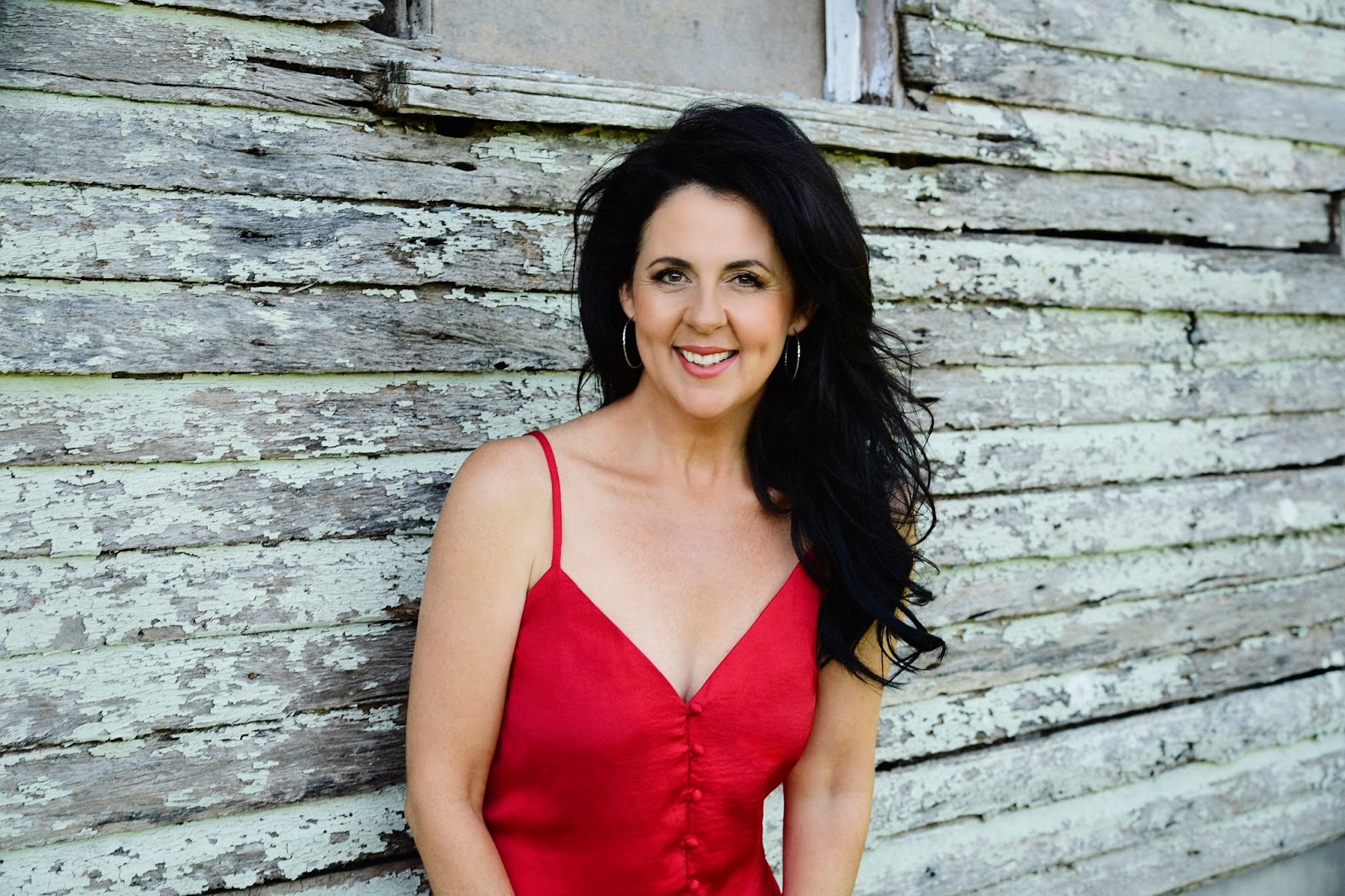
Tania Kernaghan has been responsible for many great Australian country songs over the course of her previous six albums and now her seventh, All-Australian Girl, is adding more hits to the list. Tania is, of course, a member of a famous country music family but she has made her music, and her identity, her own - with a little help from her sister, Fiona. I asked Tania about writing with her sister, the new album and the year ahead. 


What does being an all-Australian girl mean to you?
I think you’re one of those girls that can just about take on anything in the world and achieve it. You are able to pretty much do whatever your heart desires. And ‘All-Australian Girl’ was really written for all the women I’ve met over the years – the great women – from young girls through to our senior citizens. And whether they’re driving trucks in mines or they’re working as a nurse or they’re in a co-op or a supermarket or just being a mum – and I shouldn’t say ‘just’ being a mum and a wife because I reckon it’s probably the hardest job ever – it’s a tribute to those women.

You’ve written several of the songs with another all-Australian girl: your sister, Fiona. How has your collaboration style changed over the years? Or even how it began – do you remember the first song you wrote together?
I sure do – it was back in 1992 when I wrote my first song with Fiona, a song called ‘I’ll Be Gone’. It was released as a radio single on ABC Records and then it was four years after that that I recorded my very first album, December Moon. Fiona and I just started writing when we were teenagers, and we wrote about stuff that we were experiencing, people we’d met, places we’d been. Even though we hadn’t done a real lot by the time I was eighteen, nineteen years old – I was still so young but at the time I just wrote about some stuff that was happening in my life and ‘I’ll Be Gone’ was born. And that’s pretty much what I’ve done with Fiona for all of our writing career – we just real life stuff because I think that’s more relatable to people and I think that it connects much better with them.

Even as a teenager, though – teenage years can be a time of self-absorption so even to be able to look outwards, not just one of you but both of you to write songs about people and places, did you have an awareness, growing up, of the importance of telling stories and paying attention, I guess is what it amounts to.
I had the great privilege of travelling a lot with my family when we were younger kids when my dad [Ray Kernaghan] was touring and performing around Australia. And it was back in the days of cars and caravans, so you’d get to a town with a travelling show, you’d pull up behind the local town hall, you’d plug into the power, the musicians would load the gear in and do the show that night then we’d pack up and head to the next town the next day. I did a lot of that growing up and we got to meet a lot of people and visit a lot of different towns, and you were put in situations, I suppose, where there wasn’t the technology we have today as far as computer games and iPads and iPhones and all of that distraction, and you really had to learn how to communicate with people and talk to complete strangers. Talking to a stranger wasn’t a bad thing, it was quite interesting in more cases than not. I think it was probably because of those really early days and that kind of experience as a young kid that really helped shape the way we are today and the fact that we are a bit more aware of what’s going on around us rather than being too self centred or introverted.

Still, I find it really interesting that there’s three of you [Tania, Fiona and Lee] who wrote songs, three of you who are really interested in other people’s stories and you’ve maintained that over your lives. I guess this is a comment more than a question, but I think it’s a significant contribution from one family to Australian culture.
And there’s actually four of us, because our brother Greg is a great songwriter. Although he doesn’t pursue music as his career, he has written some fantastic songs over the years – in fact, he co-wrote ‘When the Snow Falls on the Alice’ for Lee and a really good song called ‘It is Goodbye, Aussie Farmer?’ and actually sang on that track with my dad and me. Greg’s a great talent. I suppose we all experienced similar things when we were growing up so to be able to sing about and write about it and observe things as we go through life, and then regurgitate it on paper into a song, it’s kind of pretty easy to do, really.

Well, you make it look easy but I always think it’s not, because there’s all that experience behind you that you funnel into your work. But still on the question of Fiona and co-writing – is the co-writing relationship with her more flexible because you’re siblings or does collaboration in general suit you?
I just think Fiona knows me so well. We really were connected from a very early age and we got on really well, and we’ve always been friends. I kind of scratch my head and can’t understand why some siblings don’t get on with each other – I think, Get over yourself and be friends [laughs]. But whatever karma we’ve racked up we’ve got to deal with, I suppose. So Fiona and I have always had a great relationship and Fiona knows me so well when it comes to what I want to sing about and the type of music that I like to record. Although she’s had over a hundred cuts with other people around the world and a lot of music of hers has been recorded for television and movies, when it comes to country songs for me she absolutely nails it and it’s so easy to co-write with her.

What was the first song written for this current album and what was the last?
I think the first song was ‘All-Australian Girl’.

That makes sense, since it’s your title track.
Yes, although I didn’t know what I was going to call it – it had a few different incarnations before that was the actual album title. But, yes, that was the first one. And then the last one I think maybe it might have been ‘Light in the Window’, the last track,

And that’s a family story too.
Yes, it is. We grew up in Albury and my grandmother lived just around the corner from our house, and we’d always get so excited about getting on our bikes when the street lights came on and riding around to Nana’s. There was always a lot of love in her home and she always made you feel welcome and went overboard spoiling us with cups of tea and she’d even iron our bedsheets when we stayed at her house because she didn’t have electric blankets so she’d make sure the bed was nice and warm in the winter before we went to bed at night. When that song was written Fiona had written the lyric and one night I was just mucking around on the piano and I came up with a melody, and Fiona said, ‘I’ve got this lyric but I haven’t got a tune,’ and I said, ‘Well, I’ve got a melody but I don’t have a lyric.’ It was the strangest thing, because the music and the words went together perfectly, it was like they were written for each other even though we weren’t in the same room when we originally wrote it. We didn’t have to be in the same room to be collaborating.

That doesn’t surprise me given how much you’ve worked together and how close you are as siblings. There’s that mystical element of how songs are created anyway, so I think it’s rational that the two of you might separately come up with things that belong together.
I’m sure there are plenty of other songs that will come that way and get onto an album eventually. I guess it’s just testament to how close we really are and that relationship that we’ve got with each other.

Is there a song that means more to you than any of the others on the album?
Well, I love ‘Light in the Window’ – it’s a really personal song for me. But when I look at the songs, ‘Homestead of My Dreams’ is a real cracker. I met Smoky Dawson on several occasions and he was such a great lyricist and a wonderful man – both he and his wife are great people. And when I first heard ‘Homestead of My Dreams’ it took me back to when I first met him but also the stories that my mum has told me and still tells me about her life growing up in the High Country. She was born on a dairy farm just out of Corryong and the stories she’d tell me as a kid growing up, riding horses to school and riding the old steam train home, racing across the hills, mustering cattle – I just felt there was such a strong connection from the lyrics to me and to our family. Smoky felt like part of our family and maybe that’s just the kind of character that he was – all families felt like they had a bit of Smoky Dawson blood running through their veins.

All your songs are really evocative of different things, and that’s to do with the way you sing them too, so that your audience can connect to them. It is a skill and a talent to be able to connect to the audience but I get that really clear sense that you always feel like you’re singing to someone, it’s not just for you to stand alone in a booth and sing to yourself.
It comes through the lyrics, too. It’s really important that they have to connect with the people so they think, Yeah, that’s about me or, I know exactly what that person’s going through. And that’s important when you’re putting songs together and you’re thinking about an album. I might have thirty songs to choose from by the time I go into the studio to record them but I put myself in a position of standing on stage, now I’ve got to sing those songs – how’s it going to translate to an audience? And it’s really important that every song, every note, every word is really strong and it connects with people.

And I guess that goes back to what you said earlier about how you grew up – that awareness of other people, going to lots of different places. You must have had a very early sense of connection with others.
Yes, definitely, and all sorts of people from lots of different walks of life. I remember in those early days Dad was doing shows with a travelling country music show and they would play at a lot of Aboriginal missions out in the Territory and Western Australia – places that you don’t even get to go to these days. Even just talking to the little Aboriginal kids when we were kids and we’d end up playing with them behind the town hall and they’d be telling us stories about how they catch pigeons. I remember one place – in Agnew, I think it was in Western Australia – we had this huge bag of apples and these wild little kids who were catching pigeons to cook them up, we gave them some apples and they came back to the next day to the caravan wanting more of these apples. They had lots of stories to tell and I never felt afraid of where we were or the variety of people we met over our lives. I just think we’re all the same, we’ve just had different experiences.

Now, this is your seventh studio album. What has been the best thing about your career and what has been the hardest?
The best thing if I could make a sweeping statement – and I don’t mean to sound too saccharine-y here – but I really feel it’s what you can give back to people, it’s not what you take from this world or this life or this experience or this career, it’s what I can give back through what I’m doing with my life. So that’s probably the biggest highlight for me: to bring joy and happiness and make someone’s life a little bit better or day a little bit brighter. And probably the hardest thing in my career would be the behind-the-scenes administration and the taking care of business side of things. It’s an enormous amount of work and when you’re an independent artist you find that you’re doing a lot of it yourself, and I’ve chosen to go down that road, as an independent artist. Taking care of business is number one, it’s the most important thing. Getting up on stage is the easy part, and singing, and entertaining. But it’s the business side of things that is sometimes the most consuming and frustrating and hard. But the good weighs out the bad.

You are involved with a lot of charities and you do a lot of other things. What are you looking forward to achieving next?
That’s a hard question. I guess I just keep going from day to day. If you had have asked me that twelve months ago I’d have said, ‘I can’t wait to get my new record recorded and the songs written and get a new album out there.’ So I guess the next thing I’d like to achieve is lots of touring and singing and promoting the new record, and getting out and seeing a lot more of Australia in the process.

And speaking of touring: you do have a lot of dates booked and it says there might be more to come. So how does it feel to have the whole year mapped out – is it comforting or is it a bit strange to know what you’re doing in October?
It’s definitely a good feeling. There’s nothing worse than having a month when there’s nothing happening in a calendar [laughs]. You have to work six, eight months ahead all the time in the music business. When I look at my year planner and see that there’s plenty happening all through the year, well into November, that makes me feel very good. I’ve just got to keep meditation and keep the vitamins up and I’ll be pretty right [laughs].


 All-Australian Girl is out now.


Monday, September 24, 2012

Interview: Tania Kernaghan

Tania Kernaghan probably needs no introduction - she's released six studio albums and won quite a few Golden Guitars, and her career in country music has been going enough to prompt the release of a Greatest Hits CD and DVD. It was a real pleasure to talk to Tania on the occasion of the CD/DVD release and to find out a bit about her life, her creative process and the causes that are close to her heart.


What was the first song you wrote?
'I'll Be Gone'. Keith Urban played guitar and backing vocals on that particular track, and that was back in 1993, I think, when I wrote the song.  That was a pretty ground-breaking career move, I guess, for me.  I never realised at the time that the song would go on to be such a great success.

So did you and Fiona [Kernaghan, Tania's sister and songwriting partner] think you'd ever like to do something together, or it just kind of happened?
Yeah, it just kind of happened. We pretty much realised that we had to start writing our own songs if we wanted to make our own mark in the music industry, and move away from singing cover songs. So we just started putting pen to paper and writing together, and that's three decades ago now [laughs] that we started writing together and Fiona has been very instrumental in a lot of the songs that I've recorded and released over the years.

So, when you said you were doing cover songs, were you mainly doing country covers, or were you doing a whole lot of things?
No, definitely country covers. It's pretty much all I've ever done, in fact. I can't really sing any other styles very much. I think I'm just so country through and through [laughs].

That's probably a good opportunity then to ask you about your influences. Have they been the same the whole way through, because you sing – or you write –what I would call a traditional country style?
Very much so and I grew up with people with Patsy Cline, and Patty Loveless, Randy Travis, a lot of those early '80s, early '90s kind of artists … When I was a kid I listened to ABBA and stuff like that. I guess those songs were always pretty much at the forefront of when I was about a seven or eight year old singing. But, definitely, the more traditional style of country music, and then I guess these days with the different instrumentation that you use and your backing tracks you can give it more of a 2012 sound, as opposed to stripping it right back. It all comes back to, really, the lyrics of the song. You can dress it up with different instruments and all the rest but the lyrics are the most important thing.

You are a storytelling songwriter and country music is a really great storytelling genre – in fact, probably the great storytelling genre. Are you conscious of telling stories when you write songs?
I just write from real life experiences, mostly, and I find that if I go out there and live it and see it and experience it, that it always makes for a better song. Or if I meet somebody and they've got a particular story to tell me, something that happened in their life that I find very touching or moving, then usually I'll put pen to paper. So, I guess, that's probably why the songs that turn out to be more like a story. But the thing with country music is it's music that people can relate to, everyday kind of working man music, and I think that's why it's so popular.

So when you're talking to people and you might get story ideas, are you in the habit of keeping a notebook, or do you tend to store it in your head and then sit down later on and write?
No, no you should see my iPhone – it's just got pages and pages of song ideas [laughs].

What did you before an iPhone?
It used to be a notebook that I used to carry around with me, but now it's instant on the phone. And then when I go to write an album's worth of material I find that I pretty much have to submerge myself in it. So I can't really be doing other things and then also writing the song. I find that I need to pretty much go away for a couple of weeks and just think song, think lyrics, think ideas and think music, and that's the best way for me to really finish off those songs. But, yeah, a lot the ideas just come from people that I meet in everyday life.

It sounds like when you're writing, it's almost like there's a really intense creative period where you get a lot done. And, I suppose, given the life you have, where you're touring a lot and you're doing a lot of other things, you need to section off that time really?
Absolutely, and that's what you really need to do. You might put a bit of ideas down to songs, but when it really comes to the crunch you've got to just totally forget about office work, paying bills, grocery shopping, all of those mundane kind of things that everybody has to do, and you just have to section yourself off and just go away for a while. And I find if I head out west or head up into the high country and just set myself up there for a few weeks, that's the best place for me to go to start writing, get serious about writing songs.

I read in your bio that you like to get in the car and go out into the countryside, and you've just said that you like to write in the high country, so it sounds like for you the land is a really powerful force or a powerful motivator for what you're doing?
Definitely. I find that I have to get right out of the city and just really get into that landscape of – I think it helps you keep in touch with the songs that you're writing, the people that you're writing for. And just to be surrounded by the wide open spaces, or perhaps it's up in the hills, definitely helps you – it nourishes your soul when you're putting songs down on paper.

And do you find when you go to country towns that you're recognised quite a bit?
Yeah, country towns, particularly, people will take a double look, but I'm very happy to talk to people and I think that I'm probably very approachable and just in my personality its normally who I am. So, yeah, I'm happy to have a chat with the people. In fact, I was down in Hughenden in out western Queensland way a few weeks ago, and just in a little coffee shop out there, and had quite a few people come up to me and want to have a chat. So I was more than happy to do that.

It sounds like you're really aware of how you're singing to an audience and that the audience feeds back to you in a way that you're telling their stories and they're also reflecting back to you whether that works or not.  And that seems like it's a really fulfilling way for you to work.
It definitely is. It's a great gauge to know how your songs are being translated out there and getting back to just that the lyrics being so important. I think that some of the best ways to roadtest songs is to be amongst some friends around the campfire and roadtest songs just with a guitar and you can soon see if it's connecting with people and on that right level. Yes, it's pretty important that I get the audience feedback because you put so much into these songs and your albums that you want to make sure they have some longevity.

I don't think we can dispute that you have longevity given that this is a three-decade-spanning album or thereabouts!
Pretty much so, and I'm very happy due to the fact that not only is it to our twenty years of recording songs – the greatest hits also embraces a two-hour DVD and that tells the story of my life, and my touring and lots of music video clips and how I got into the music business and a whole swag of things. So it's really something that I'm very proud of, this particular package.

I was reading that it seems like your Facebook fans have a bit of influence in the song choice. Did it feel like of a strange way to choose the list?
It's incredible the way social media works these days, but I had my favourite songs that I wanted to include on the greatest hits, and I put a call out there to everybody on Facebook and said, 'This is what I'm doing. What are some of your favourite songs that you'd like see included on the track listing?' It just came in thick and fast. 'Boys in Boots', 'Nine Mile Run', 'Cowboy Up' – you name it. So it was the ones that really proved the most popular that got the final say on the album.

Was your own list quite different then to what ended up being on the album?
No, there was a couple of songs that I wouldn't have thought would have made it there, that had been so popular, but it was a pretty much I reckon 75 to 80 per cent there, it was pretty much what I felt in my heart that were the right songs.

When you're out on the road performing – even though you look like you must have started singing at the age of two to cover three decades' worth of performing – does it feel like performing is almost a different job to songwriting, so it's like different version of Tania that has to go on the road to the one who is sitting there writing songs?
I think what you see is what you get with me, I'm pretty much the same as I am at home as I am on stage. But I love singing on stage, I feel like … You've heard people talk about being in dharma? Well, when I'm on stage I feel like I'm in dharma. I just really love that connection with people and the audience, I love singing, I love entertaining. I love making people happy, and I just really find that's so much easier to do when you're on stage. And I was four years old when I first got up on stage and sang, and I got a few claps and loved it, so I thought I better learn some new songs. I never, ever doubted in my mind that I wouldn't be an entertainer or a singer. I never had another choice – you know, like a lot of kids would say, well yeah, if that doesn't work out I'll go and do this. But I never had that. I just always wanted to sing.

You mentioned dharma, which raises the idea of music as a spiritual practice and creative work as a spiritual practice – it seems like from a really young age you did know yourself and your own mind well enough, almost identifying that it was a spiritual practice even then.
Yeah, maybe so, because it is an incredible feeling when you're singing, and I've never really thought of it but I like that. But I guess that singing and music can be so very much a healing thing as well, and I feel the same when I'm on a horse – when I go riding it's just such a great feeling and it's so hard to explain to people that don't know what it's like, or have never ridden a horse before. The same kind feeling, it's just like you know you're supposed to be there, and with the music that's exactly how I feel. I know that I'm doing the right thing. And when I'm a bit removed from it, and I haven't had the opportunity to go out on the road and tour or sing for some reason or other, it's truly like you're being stifled.

So what you're talking about is the practice of being present, which is something that most people strive to achieve but don't actually achieve. And I think some musicians get it – not all of them, because I think a lot people when they're performing are worrying about various things – but it sounds like you've really cracked that ability to be present in those two things, horseriding and performing?
I think so, and, yeah, you're very much on the money with being present. And I do feel sorry for people who are working at a job that they aren't getting any sort of gratification from, and they just feel like it's a struggle. I just think we're not put on this earth to do that; we're supposed to be doing stuff that we love, and life shouldn't be a struggle – it should be a pleasure and an enjoyment. Sometimes you've got to make some dramatic changes to really get yourself in the right zone, but I think don't waste a minute with what you're doing. If you're not happy doing what you're doing, change and do something else because just because our parents taught us to do a particular job or expect something of us, it doesn't mean that's what we've been put on this earth for.

I think you've identified that to do with work but also your service is obviously a part of your life, because you are a patron of two different charities, so I was just wondering if you could say a bit about Angel Flight and also about Riding for the Disabled, and how you became involved and what they mean to you?
Riding for Disabled, I got involved with them in about 2000 when I'd released a song called 'When I Ride', and there was a young girl who was a rider at the Riding for Disabled Centre in Raymond Terrace (NSW). She contacted me and she said to me, 'The lyrics in your song are' – and she quoted a few of them, and she said, 'I close my eyes and I'm on the wind.  I can fly when I ride.' She said, 'That's exactly how I feel when I'm riding my horse at the RDA centre.' And it was through her and then a phone call from the head office of RDA asking me to be their patron, which I was just absolutely stoked about because I'm passionate about horses and I think that what Riding for Disabled provide that terrific service to so many people, it's just fabulous. That's kind of how I got involved with RDA. And then similarly to Angel Flights, I think I got involved with an outback fundraising event through western Queensland about four years ago, raising money for Angel Flights. Angel Flights look after non-medical emergency cases for people who are in remote and rural regions who need to be taken to medical centres for treatment. And there's a whole swag of pilots and earth angels, as we call them, people on the ground that look after these patients and it's all a free voluntary organisation. So it's so important to people in remote areas of Australia which I'm very passionate about as well.

It sounds like you have a really rich and varied and very satisfying life, which is amazing. I think that's what most people aspire to have and perhaps don't ever get to, but it just seems like you've got all these things sorted out, and it's really lovely to hear.
Well, I've got a lot of fingers in a lot of pies, it seems, but there's never any time just to sit on my heels and say, 'Oh, I don't know what to do, I'm bored'. There's so many things to experience, and I always say life's like a big smorgasbord, there's just so many things to try and experience and to taste – and start with Australia, because I believe we've got one of the best countries in the world here. We should always make sure that we look after it and look after its people. 

Just before I wrap up – you're going to head out on the road obviously for this?
Yeah, we'll be on tour with the greatest hits, and so this year and then also into next year as well, so there's plenty of gigs and shows and things to be done in the next twelve months or so.


Tania Kernaghan's Greatest Hits is out now.