Monday, September 28, 2015

Sara Storer headlines the Murwillumbah Country Roots Festival 2-5 October

The inaugural Murwillumbah Country Roots Festival takes place this long weekend on the New South Wales north coast. Organised by local country music artist Lou Bradley, the festival is headlined by Kasey Chambers, Sara Storer, The Audreys and Archie Roach, with over 60 all-Australian acts taking part across four stages. Late last week I had the chance to chat to Sara Storer about the festival - which also features her brother Greg. For the full line-up and other details, visit www.MCRFest.com.


When did you sign on to the festival?
Last year I remember [organiser] Lou [Bradley] talking about whether I’d be keen to be a part of it and I said, ‘Absolutely.’ And I said, ‘Why don’t I bring my brother Greg Storer as well?’ We’re sort of like a package, which is great, because Greg’s heading up with his family, I’m heading up with mine, and it’s sort of turned into a family gig with all the kids, and everything’s going to be so much fun.

So when you say ‘all the kids’, are you pressing any of them into service?
Often I head off and say goodbye  and they’ve sort of got no idea – because they’re still so young – what I do. But they’re at a great age now – well, two of them – where they can come and watch and see what Mum does. My brother’s got four kids and I’ve got four. They’ll probably watch for about five seconds and then want to go and play in the dirt [laughs] and I don’t care anyway because I’m not looking after them – my husband has to do that.

Are you still living in the Territory?
No, we’ve moved. We’re down just out of Albury.

That makes a bit more sense, because I thought coming from the Territory would be a big commitment for the festival.
No, we’re not coming from Darwin any more. Too hard. And as much as the lifestyle’s pretty unique, living up there, it’s too far. We love Albury. Great people and it’s so central to both Sydney and Melbourne.

Quite a bit colder, though.
Yes. The blood hasn’t really thickened up yet either. It was freezing. We’re in this little farmhouse – there’s no insulation, the kids all whinging. I said, ‘This is what it was like in the olden days, kids, so just zip it’ [laughs].

Hopefully it will be a bit warmer in the north of New South Wales over the October long weekend. It might be wet though – it can sometimes rain a bit up that way.
Okay, there might be a bit of rain – thanks for that little tip, because I am hopeless at what to pack. We’re going to need a trailer, that’s the worrying thing. To put the kids in the trailer [laughs].

So you’re obviously planning to stay the length of the festival.
We’re going to try. I’m going to try to be there on the Saturday – my brother’s on the main stage that day. Then we’ve got Sunday off and of course we’ll do the festival thing. And then I’m not performing until the Monday night. So it’s really great. Normally you fly in and you fly out and you just don’t have time to see anything. So this has worked kind of as ‘I’m going to a festival’ – it’s a bit of both, so it’ll be great.

Does it mean – I’m just thinking from a technical point of view – that if you’re not singing until the Monday night and you’ve been seeing friends, talking to people at shows, so you’ve been shouting a bit, do you have to really think about how to save your voice?
I don’t have that problem. Because I write my own songs and sing, my voice is never pushed too hard because I sing naturally where my voice takes me. Whereas if I sing a cover, I get off stage and my throat really hurts – it’s a different melody and it probably pushes me a bit. But with my own stuff I’m pretty right – it’s not that hard on my throat. I’m not like a Jimmy Barnes – I’d love to [be], though. It would take a fair bit out of me. I do probably have to watch I don’t have late nights. Catching up with everyone, you have one too many and then you’ve got to do a pretty good job the next day, so you have to be careful of that one. Socialising.

Is there anyone in particular you’re looking forward to seeing perform?
Well, Kasey [Chambers] – I do love her music. We’re friends, but put that aside – I’ve got all her albums. I’m a bit of a fan. So I’m looking forward to Kasey. And I love Mustered Courage. They’re just constantly on in the car, so I’ll be able to sing along. Not where they could see me – because that would be quite embarrassing.

They might be quite pleased, though, if you wanted to join them for a number.
[Laughs] Maybe. Or maybe they might tell me to get off! I have jumped up with [them] at Tamworth. It was after the [Golden Guitar] awards – it was on the Sunday. The last Sunday in Tamworth is the day I go and just have a great time – catch up with people. So I jumped up and sang a couple of songs with them. They’re just awesome.

You’ve also just given a tip for anyone heading to Tamworth, to hang around for the Sunday in case there are any interesting collaborations going on.
Oh, absolutely. And Shane Howard – he’s just an unbelievable songwriter – can’t wait to see him [at Murwillumbah]. Archie Roach is on. It’s going to be terrific.

I noted that the festival is being MC’d by Ben Sorensen but also by Buddy Goode – and I have to say that makes me a little afraid for all of you!
[laughs] You don’t sit down in the front row, maybe.

Yes. But I do think it will be highly entertaining.
Oh, he’s hilarious. For ages I didn’t know who he was and then I worked out how it was and I was kind of embarrassed that I didn’t know.

I still don’t know who he is.
Oh, okay. Well, that’s what happens, I guess, when you’re having a family – you sort of get left behind a bit and you don’t catch up on all this stuff. It’ll be good. It’ll be an awesome festival. Can’t wait.

And the festival is all Australian – how important is that to you?
I guess that is a great thing. Music’s music – it doesn’t  matter where it comes from – but it’s kinda cool in that it showcases our talents here in Australia and I think that’s a great idea. I love that stance – all Aussie. Great. Bring it on.

I should have said this at the top when you mentioned Lou, but Lou is one of these quiet figures who seems to know everyone, so you must have known her for quite a while.
Lou came on the country music scene – I was sort of new as well. She was probably a couple of years after me. And there was talk in the town of this Lou Bradley. And it’s always great – we always need some new talent in country music world. So I went and had a look and she’s just a brilliant songwriter and entertainer, and we became mates. We’ve done many gigs together and last year she rang me and asked if I wanted to be a part of [the festival] and I said, ‘Yes! Make sure I’m counted.’ So I think she’s gone through and picked all the music she likes – it’s pretty much who she’d have in her back yard. And I was just so lucky I was picked – otherwise I’d be ringing her saying, ‘Hey, where’s my name?’

Talking of festivals: what are your Tamworth plans and are you working on a new album?
Well, I am. I’m recording it within the next few months, so it will be completed by the end of the year to release my first single and video clip at Tamworth next year. And I’ve got two shows at Tamworth – one is my own show at Blazes and the second gig is the gig that I absolutely love, where I pair up with my brother, Greg Storer. We call it the Kitchen Sessions and we’re doing that at the pub on the Saturday.

Sunday, September 13, 2015

Lee Kernaghan - The Songs & the Stories in Concert

No doubt someone has called Lee Kernaghan 'the hardest-working man in country music' - and that would be because it's true. He's on tour now with undoubtedly the hardest-working band in country music, the Wolfe Brothers, bringing The Songs & The Stories to towns around Australia. I spoke to Lee a few days ago about his epic end to 2015. 


Lee, I’m worried that you’re not working hard enough.
[laughs] It’s a labour of love. I’m lovin’ it.

 And it’s a massive tour – you’re going all over the place. This is what you do – you tour a lot – but I’m really curious as to how you keep your energy levels up.
I’ve got a few secrets. I take the Ab Roller out – work on the abs. I go to the gym as much as I can. I have a detox that I take – wellness greens and vitamin C, fibre. I have that every morning. I just try to eat good food as much as I can, drink as much water as I can. And a bit of Fireball whisky to wash it all down at night.

[laughs] And how about your voice? I know some of the advice to singers is ‘don’t talk the day of a gig’ but you’re doing media and all sorts of things. How do you protect your voice?
I try not to do a whole lot of interviews on the day of the gig, so just relax it a bit. And that Fireball whisky does work wonders on the vocal cords.

In this show you’re doing an acoustic first half, so that puts your voice even more on show. This is the first time you’ve done acoustic on a tour like this, so what prompted that decision?
To do something that I haven’t done before. And this whole show really has been a perfect example of heading into the great unknown. I’ve never been as nervous as I was before the first show in Townsville just last week. I had no idea how people would react to the show but it became very evident very fast that we were all a part of something much bigger than us, and it’s been an absolute privilege and an honour to bring these songs and stories to life on stage.

The first half is songs from albums you’ve done that aren’t Spirit of the Anzacs and the second half is Anzacs songs. How do you choose a set list, given that your career has been so extensive?
We just have a bit of a yarn, the boys in the band and I. We knocked it around. We rehearsed for a couple of weeks and then decided which ones we wanted to do live. It’s unplugged and semi-acoustic so the boys all bunch up close together on stage and I’m loving that part of the show. It’s a lot of fun. Christie Lamb joins us as well, singing harmony vocals, mandolin – she’s a brilliant piano player, acoustic guitar player. She stars in the second half of the show as well, doing some solo songs. We’ve also got Jon English’s son – the great rock legend Jon English. His son Jonathan English is in the band. So it’s a brilliant bunch of musicians.

And how are those Wolfe Brothers coping with acoustic?
I don’t think they’ve ever sounded better. It really showcases the boys’ vocals and their musical ability and musicianship. They’re knocking it out of the park.

They’ve possibly surprised themselves with that, because they’re so used to playing loud.
That’s right. We all have. Even for me, I [usually] strap up, turn on and go. And there is that element in the show as well, but there’s a whole lot more to it.

It would be really easy for someone in your position, Lee, to think, What I’ve been doing has been working well so far – I’ll just keep doing it, and you talked about being nervous before that Townsville show. But I get the feeling that you like challenges – you like to keep moving forward as an artist, and that relentless curiosity about what’s next is partly what keeps your audience moving with you.
I think that this show, the fact that everyone involved in it was challenged to take it to the next level, it’s opened up some new doors and set a new template for how I will tour in the future. Using the screen and the theatrical lighting is definitely something I want to continue doing.

And what about the acoustic part of it – will you incorporate more of that in future?
Yes, I really do enjoy getting out there and doing it in that mode. It’s fun and it’s different, but I love plugging in electric and the bigger production stuff that comes in the second half.

How long is this show?
It’s about two and a half hours. The show starts at 8 and ends about 10.30 with a 20-minute intermission.

The reason why I ask is so that people don’t look at the ticket time and think they can stroll in late because the show doesn’t start right then – as can happen!
No, the quality’s on from the word go. There’s no filler [laughs].

Do you keep going back to the same venues on these tours or do you try to pick some different towns?
My management company generally chooses which towns and venues to play. We are limited – we need to have certain capacities in order to cover the cost of taking a production of this size into a town. That’s how it works, although sometimes I think they just stand in front of a map of Australia and throw darts and say, ‘Okay, we’ll do that’ [laughs].

For the full list of tour dates, visit www.leekernaghan.com
 Spirit of the Anzacs is out now.


Sunday, September 6, 2015

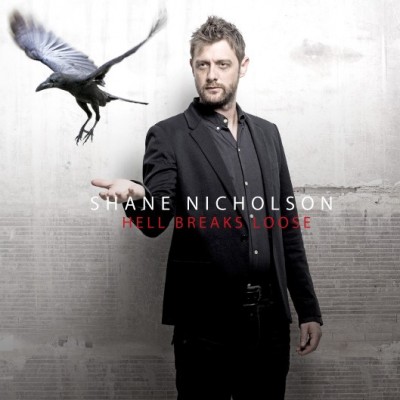
Album review: Hell Breaks Loose by Shane Nicholson


Hell Breaks Loose is Shane Nicholson’s first solo album since Bad Machines in 2011. He’s been busy in the years between, releasing Wreck & Ruin with Kasey Chambers and a live album of his own (Pitch, Roll & Yaw), and proving himself to be an extremely adept producer of other people’s albums. For his own record, though, he turned to another accomplished Australian producer, Matt Fell.

Perhaps it is Fell who brought out Nicholson’s pop sensibilities more than we’ve seen over the past few years. Nicholson’s first two solo albums, It’s a Movie and Faith & Science, were studies in how to create great pop songs – ‘indie pop’, if one has to put a term on them, even ‘indie rock’, where neither term is meant as a pejorative. Those albums didn’t feature country music songs, although he has proved several times over that he can write great country songs too. On Hell Breaks Loose, both parts of his lineage come together in a seamless way to create an exceptional piece of work.

There are three songs literally at the core of this 13-track album – tracks 6, 7 and 8 – which are also the core of what Hell Breaks Loose seems to be about: essentially, what happens to a thoughtful man when his life takes a turn that he didn’t expect. ‘One Big Mess’, ‘Secondhand Man’ and ‘Hermannsburg’ all contain elements of despair – ‘One Big Mess’, in particular – but there’s also a vein of hope running through them. They seem to describe Nicholson’s state of mind – state of being, perhaps – as he made this album. They’re his present, and also his past and future. It took repeated listening to realise that these three songs don’t really act alone – they should be listened to as a triptych. And, from them, an understanding and appreciation of the rest of the album grows. In ‘Hermannsburg’ Nicholson sings that he arrived in that place ‘a broken man’ – then, ‘I wonder who I will be after Hermannsburg’. He sings it with a touch of curiosity, though, not confusion, and therein lies the hope.

The rest of this album contains songs of a high standard and variety that fans of Nicholson would expect. Country music fans will find plenty to love in ‘Irons & Chains’, ‘Slow Coach’ and ‘When the Money’s All Gone’; the reflective, plaintive ‘Single Fathers’ is a lullabye of sorts, and ‘Hell Breaks Loose’ harkens back to ‘Long Time Coming’ from 2008’s Familiar Ghost.

That there’s a broad palette of moods on this album doesn’t mean, however, that there’s necessarily something for everyone. This is not an album for easy listening or background noise. It’s a piece of art and should be treated accordingly. And don’t be surprised if, after a few goes round the turntable, you find that as you listen to those three songs in the middle your heart quietly breaks, just as Nicholson’s must have, and then continue listening as he puts it back together again. 

Hell Breaks Loose is out now through Lost Highway Australia/Universal.
shanenicholson.com

Wednesday, September 2, 2015

Interview: James Blundell

After four years without an album, James Blundell has certainly made his fans' wait worthwhile with the release of the excellent Come On In. I spoke to James a week or so ago, just after he'd finished a long run playing at the Brisbane Ekka. 

Congratulations on the album, which I’ve so enjoyed listening to. It sounds like all the tracks belong there, if that makes sense. It makes me think you must have discarded a few along the way, because you really have got the balance right. All the songs sound like they’re in the right place.
I cannot tell you how much I appreciate that comment, because it’s exactly what we were trying to do. Karen Waters, who I’ve worked with – who is Red Rebel Music – is a really, really amazing music person. I just love how she views it. That’s actually the point of the album. We had a lot of songs to choose from initially – it was just going to be a series of solo acoustic singer-songwriter tracks. So we started work on that and I was sending acoustic demos through to Karen and she said, ‘Well, how many more of these have you got?’ and I said, ‘How many do you want?’ That was how the song selection started and it was a fairly healthy way to do it rather than as an artist having a collection of songs that I was very protective of and said, ‘This is the album’. Which I’ve never actually done to that degree but there’s always a focus on what the collection of songs is, what your shortlist is. And we just kept adding them up. We actually started work on the album in September last year. It got to the stage where we were having so much fun with it that Karen said, ‘We really ought to wrap this up and master it’. And that’s about how much hard thought and blood and sweat went into it. It was a very, very enjoyable experience. I wasn’t in the same room as any of the musicians and the producers.

Did that seem like a weird thing initially given how you’re used to working in the past?
I’ve always believed that being in the same room as the band comes down to that interaction. But what happened this time round was that I would deliver the vocal acoustic demo. The first two tracks went to Theo Posthumus in Canada who’s never met me – we’ve never even Skyped. We were planning to do that but it was working well just sending the music back and forth. Then Karen engaged Nick Howard in Sydney and, again, we never even got face to face on screen but what I found was that because I wasn’t in the same room as those people all the time, you don’t try to influence them. James Gillard, a wonderful bass player, when he’s working on album he says there should be a thing called an Artist Alert – when the artist comes into the room the objectivity flies out the window [laughs]. I’ve been meaning to call him and tell him that I think he’s dead right because not being there to say to the producer while he’s trying to do something, ‘Oh, I don’t like that, that’s uncomfortable’ – you don’t get that choice. What happens when the file comes back to you is that you open it up and rather than being confrontational it’s like, ‘I never thought of doing it that way’, which opens up a completely different interpretation to it. I found it very, very invigorating and really, really enjoyable, and particularly because most of the two places I recorded were in my bus and in the spare room of the shearers’ quarters that I’ve just renovated at home. And one night I set myself up – I was absolutely sure I was good to go for vocals and it just didn’t happen. I don’t know why – I just couldn’t get into it. So I left everything set up, got up at half past five in the morning, put my dressing gown on. I didn’t have to drive through traffic, I didn’t have to park my car – it was just all there and good to go.

 I was making some notes as you were talking about sending off that demo, and those notes were along the lines of how much trust you had to have with the people you were working with, how detached you had to be from the outcome of what they would do with it, how vulnerable it actually made you, in some ways – and that’s a strength, that vulnerability – but also how much you had to rely on your instinct in terms of who to work with and what was going to happen.
I think in hindsight the two pivotal parts were that I’d already developed a very high level of trust in Karen to begin with in the conversations we’d had prior to even starting work – I just thought, I really like how this woman sees music – and the first interactions with Theo from Canada were so refreshing and exciting. I’ve always been very experimental in my music – I think that’s vitally important, you’ve just got to stay open to it as an art form, you just can’t say, ‘This is my sound and I’m going to do it this way forever and a day’, because you’d be boring yourself in a heartbeat. So letting go of everything and just being the singer was wonderful – I had an absolute ball. Quite often when I’ve worked closely with producers there’s been quite a lot of … Of course it’s not interference, they’re producers, that’s what they’re there to do. But you can wind up in a reasonably confrontational situation talking about even fine tuning, and that didn’t happen because we weren’t in the same space to argue. It was great.

In terms of not stagnating with your music: these are risks and for a lot of artists, the deeper they get into a successful career, the harder it is to take those risks, because of course what you’ve been doing has been working so why would you risk anything else. But it sounds like             for you the fire of creativity is very much alight – it’s something that you’ve always had.
I’ll be purring if you keep that up – that’s exactly right [laughs]. I seem to be incapable of living a normal domestic life but I’ve never been more stable creatively. I’ve been blessed in so many ways to have a very colourful and challenging life, and there’s just more and more to write about and have an observation about. I was saying to some young people I was working with at the Brisbane Show, ‘The beauty of this is that as a writer getting older is one of the few things where it’s a benefit rather than a negative because the palette gets richer and richer. You were saying before about letting go and it is all about trust. As I said, I had a high level of trust in Karen before I started, instantly liked what the first producer did and am now an avid fan of Nick Howard’s. I’m trying hard not to get myself completely sold on just sending him the next three songs for the next album. Part of this process that I’ve enjoyed so much is not knowing what was coming next and that was very stimulating.

Because you sit within the country music genre and your fans are within that genre that is, as far as I can tell, the one musical genre in Australia where the audience doesn’t necessarily expect you to turn up and do the same thing every time. If they like you, they like you and they’re open to whatever you can bring.
I think that’s a really relevant observation and that has changed in that I was considered the heretic of the genre for a really long time. At the end of the Slim Dusty, Smoky Dawson, Buddy Williams thing I came in from the angle of [Kris] Kristofferson, Steve Earle and Willie Nelson, Springsteen and Mellencamp and all those rockers – The Eagles – all of those things were part of my background. Now I can see a broad range of good young artists who are not afraid to use their influences. I was talking to some young blokes this Saturday just gone and I was asking them if they had to do a three-song set – an original and two covers – what covers would they choose and why. One of them chose a Nine Inch Nails song. It was just really good to see that they’re not genre bound. And I also believe very strongly that once the public got the ability to divide a track at a time and compile their own playlists, I suddenly had heated conversations with record companies – I walked out on my contract saying, ‘You can’t sanitise the process of music – you have no idea what people are going to like.’ Because when they download ten tracks they’ll have Kylie Minogue beside Jim Morrison and the Doors and that’s the nature of music – people just like the song. What you put your finger firmly on is that the loyalty of the patron of the country music genre is that they then support the artist and in a way I think they expect them to do different things. Slim Dusty, all of a sudden the guy’s done an album about Star Trek, and rather than be vilified for it, it was embraced and one of his biggest sellers, and I think that was a very fair illustration. And something else that I meant to touch on before – I grew up in 1964 and probably started to consume music in the late ’60s, and there was no genre classification then. I was having arguments early on with the traditional record industry, they were saying, ‘You’ve got to define your sound’. Well, The Beatles never did, Elton John never did. The people I loved never did. I don’t see why it’s essential. And at the risk of, as my nephew says, covered in a cloud of smoke, I think it’s been borne out because the public are just interested in the songs they like; the rest of it is all the industry trying to second guess itself.

Before when you were talking about being a heretic I was thinking what probably most branded you a heretic was that you recorded a song with that nice young man from Australian Crawl.
That’s right [laughs]. ‘How dare you! How dare you let them!’ And, completely objectively, the rest was history. That was an amazing period of time that I wouldn’t swap for all the rice in China. I learnt a great deal from it.


On to the songs from this current album, I was listening to ‘Hills of Brisbane’ and it made me want to visit, and I wondered if Tourism Queensland have been on to you yet.
No, no, but we’re going to approach them if they don’t call soon [laughs]. I’m being very silly, but funnily enough I’ve just done the last ten days at the Exhibition [the Ekka] and the bloke who I’m lucky enough to play drums with when I can afford him is driving me home, and we actually got lost – well, not lost, there was a choice of three roads and I picked the wrong one, and I’m a local, I should have known better. But we drove through all the country that that lyric and the song, about ‘struggling home’. It’s a beautiful city. I love Brisbane and I’ve defended its virtues and its reputation since I was a teenager. That’s why it was such an easy song, in a way, to write but, that said, it also took me seven years to get it right.

That’s the nature of craft, I guess.
That’s right. And I’m finding now writing any amount of new material that I’m going right back into some of the stuff that I discarded years ago because I’d have the idea but couldn’t figure out what to do with it. That’s a real pleasure, going back into the treasure trove.

So it sounds like even though it’s been four years between your last album and this one, there may be something else fairly soon. You have a lot of material.
You’re way too astute. Karen and I have already spoken about the fact that when I had my own boutique label I was trying to find a way to get some of the young artists I loved through the roadblock, the machinery that the traditional industry used to be. I said to them all, ‘We’re not going to be working on an album-by-album basis. We’ll go in three or four times a year, record and track your progress as you evolve as musicians. And your albums will subsequently become a collection of the four or five songs you’ve released plus four or five new ones.’ So when someone goes to spend $19 or $17 online or whatever it is, it’s a bit like a guarantee – they know they’re going to enjoy at least half of it, rather than buy a $20 for one song and hate the other nine.  It also goes back to a thing – one of my favourite albums of all time is Yellow Brick Road [by Elton John]. Bernie Taupin was in American and Elton John was in England and that was [written] by fax machine and charts. That’s clever and it sort of illustrates the points we’ve been making, that music is much more than just sitting down and trying to write hit songs.

Come On In is out now through Red Rebel Music and Revenge Records. 

Monday, August 31, 2015

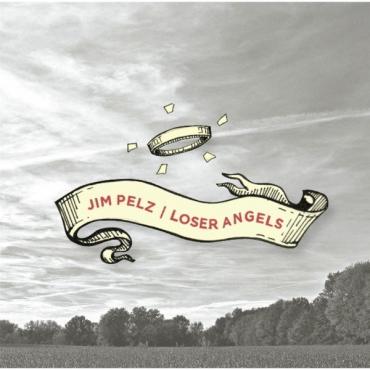
Album review: Loser Angels by Jim Pelz

From the first song, ‘Faded’, this album is a rollicking good time. Such is the energy on these tracks that I wanted nothing so much as to be sitting in a bar watching Pelz play, because it sounds like that would make for a really great experience.

Pelz is the singer/guitarist for the Cincinnati Americana/Bluegrass outfit Hickory Robot, so his country musical pedigree is well established, and these are definitely country songs: the instruments, the time signatures, the lyrics all establish that, with some variations. There are influences from across the decades of country music – echoes of The Byrds mixed in with the lyrical sharpness that marks the latter years of country.

Pelz demonstrates that he knows what each song needs. On the tenth track, ‘Sand in the Machine’, the lead vocals are given to Lauren Schoelmer, a soulful female singer who gives the song the drama it requires – as well as a female narrator. On other tracks he’ll adjust his own vocals to suit, and he clearly understands what instruments are needed when. While the album is, as mentioned at the top, highly entertaining, it’s also musically sophisticated – listening between the lines, so to speak, there is a lot going on.

And still I come back to that idea of what Pelz must be like live: to capture joie de vivre along with the essence of his songs is always going to be a treat for a listener. So if you’re ever near Cincinnati, make sure you go to a gig and then drop me a line to tell me what it’s like.

Loser Angels is out now.


Interview: Greta Stanley

Far North Queensland artist Greta Stanley recently released her debut EP, Bedroom City, at the age of 20. Greta has already built quite a following and Bedroom City proves why. It was my pleasure to talk to her about her music.


Congratulations on your EP, which is just a delightful collection of songs – and your voice is captivating, which I’m sure you already know because people have told you.
Thank you! It’s always nice to hear.


I’ll start with a perhaps unusual question, by asking you what the sounds of your childhood were.
I guess I was influenced by whatever my parents were listening to, with a bit of terrible stuff that my friends were listening to [laughs]. I grew up listening to Missy Higgins, Red Hot Chili Peppers, the Dixie Chicks were a big one for us, the Waifs, Bob Dylan, Johnny Cash. And then the stuff that I would listen to – I remember just loving Pink when I was a kid. And Jojo, which I think was a hit back then – but it was terrible [laughs]. Pink’s all right but Jojo no deal. But I guess a mix of everything. My brother was listening to Eminem and Alien Ant Farm so I thought that was cool and I listened to that as well.


That’s quite a mix of things.
Yeah, it is.


You liking Pink and listening to the Dixie Chicks – I can hear that in your music. Natalie Maines [of the Dixie Chicks] has quite a strong, articulate voice and Pink is a very developed singer. So out of that background, how did you develop your sound?
There was always a guitar in the house when I was growing up. My dad played a few chords. I showed an interest in it after he showed me the basics and I kept learning. I taught myself through online tutorials and learning off other people at school or friends. A family friend, Dusty, he taught me the blues, which was awesome. Dusty taught me great music. I think the first song I ever learned was ‘Ground Control to Major Tom’, so I had good taste from then on out. I guess I started writing my own songs and playing them to family and close friends. The first few were absolutely terrible and people thought I was terrible [laughs] but I just really enjoyed expressing myself through music and the more I did it, the better I got and the more confident I got, and the response I got was better the more that I tried and put it out there. I’m still developing as an artist. I haven’t involved myself in one particular sound. I hope in a year’s time that I’m going to be better or different or something like that. But it kind of just came naturally. I’ve never set out to have a certain sound, it’s just whatever I’m writing and feelings that I’m feeling will come across in how I sing, if that makes sense.


Absolutely, it does. A lot of people would be content playing guitar in their bedroom and maybe singing away to themselves. With singer-songwriters who are performers, there’s always that element that the stories you’re telling belong to a bigger audience and that’s the point at which you decide to start performing. Did it feel a bit like that for you – ‘my bedroom is not big enough any more’?
Yes [laughs]. That’s how it starts. I was always playing in my bedroom and then I started to upload stuff online – I’d post a video on Facebook or something on Soundcloud, and people really liked it. I got a good response. Once I finished high school I thought maybe I should give it a shot. So I moved from Mena Creek to Cairns, which is an hour and a half north, and I did music at TAFE – a Cert III and a Cert IV – and just being surrounded by people who are in the same headspace and same industry is inspiring. Through TAFE I was able to learn about how to get gigs and how to get my stuff. TAFE teaches you a certain amount and then it’s up to you, and I followed through. I started busking in Cairns and people from venues saw me busking and asked me to play at their venues, and it just all went from there. It’s such a nice feeling to play to people. I mean, sometimes I’ll play to drunks who don’t give a crap [laughs] and sometimes I’ll play to people who will come up to me and tell me that I’ve really spoken to them with whatever I’m singing at the time and that’s what makes it all worth it. I’m glad I got out of my bedroom [laughs].


Just on the subject of busking: it takes a lot of guts, I think, to stand there when the audience is so close. If you’re on a stage there’s at least that little bit of distance. Do you love busking or do you see it as a challenge?
I think I like busking almost better because in a way I don’t get as nervous because people are just walking past – some people will stop and listen for a while, and that’s a bit nerve wracking. But when you’re playing a gig – especially a really important gig – all eyes are on you and all the focus is on you. But when you’re busking people are just walking past having a little listen and they keep on going, and I think that’s better because it’s not all the attention on you, which can kind of rattle your nerves a little bit. And busking builds your confidence – you just meet so many people and I think it’s a great way to practise your skills, and if you stuff up it doesn’t really matter because most of the time people are just walking past.


Have you ever busked at the Tamworth Country Music Festival?
No, I haven’t, but I would love to.


You’d better … particularly if you have busking experience. Because so many big country acts have started their careers by busking on Peel Street, everyone goes to look at the buskers because they’re never sure who’s going to be there. So it’s a massive crowd, and a knowledgeable crowd, and especially if you have experience, you’ll go down a treat there.
That would be awesome. I’ve been making a note to look into the Tamworth Festival.


I’ve interviewed Fleur McMenamin in the past and I think she’s terrific. It would be great to hear a bit about your relationship with her and how it’s helped form your career.
I was just so lucky to meet Fleur. There’s a programme in Cairns called Spotlight and they ran this competition, and I entered an original song. From there I was selected to attend Bigsound in Brisbane, which is a music conference. So Fleur was one of the people who ran that competition, so when I went down, I went down with her. And she was the one who found my song and said, ‘This is incredible’. Then she got into contact with me. It was funny – she said if I had entered a day later I wouldn't have been in with a chance, it was the very last minute. From there I guess we kept in touch and she gave me the ropes of what I should take to Bigsound and what I should have ready. Being someone like Fleur who had a lot of experience in the industry, she knew a lot and I knew nothing, and she really helped me out. She introduced me to Mark Myers, who was my producer for the EP, so if I hadn’t met Fleur I have no idea where I would be right now.  [Laughs] Probably still in my bedroom! So when I went to Bigsound with her I guess, like anyone you hang around with, you get to know them, and me and Fleur really hit it off. She’s been mentoring me, co-managing in a way, and we’ve just become really good friends. I love her. And she’s just had a baby, so I haven’t heard from her in a little while.


I think Simon McMenamin played on your EP as well?
Yes.


I find it really interesting that they have this classically trained background and they’re both operating out of the Cairns area, because a lot of people would think you’d have to move to Brisbane at least to make a go of it. They’re so committed and passionate about music that it’s really infectious.
It is. She’s a musician, a mentor, a mother and a friend all in one. There needs to be more Fleurs in the world.


Well … I think what tends to happen when you’ve had that sort of experience is that you, in turn, may end up mentoring someone at some stage, because you’ve felt the benefit of that connection.
Yes, definitely. I’m so grateful to have met someone like her and, like you said, I hope that one day I can help out someone with the knowledge that she’s given me and what I’ve learnt myself as well.


You mentioned Mark Myers, who was your producer, and it seems that he became, in the studio, a bit of a collaborator as well – is that something you were expecting to happen?
So, I went into the studio and we did the first three songs before Bigsound – so we just did them to take down to Bigsound and then after that the idea of an EP was floating around and Mark said it was a good idea and Fleur said, ’You should do it’. So I went on to record the next three with Mark again. The first day in the studio was pretty nerve wracking but Mark’s awesome to work with. It was so easy to work with him, because if you’re really comfortable around him – which I think is really important in a producer, in someone that you’re working with – he really appreciated my music and really liked it and that’s why I was open to any suggestions or ideas that he had, because I knew that his heart was in it.  So he featured on ‘Left’ and ‘Bedroom City’ in the vocal department – you can hear him doing some back-ups there.             So I just went in with me and my guitar, and that’s all I had for the songs. I wrote them and I played them on the guitar, and I showed them to Mark, and from there we brainstormed where we were going to take them. He had a lot to do with how they turned out because they’re more than I imagined initially, in the best way.


It’s interesting the different forms your work can take – you compose it on the guitar and originally you compose it for your voice and the guitar, and then someone else comes in with a different interpretation of it. I guess, though, each time you perform the song it’s a bit different, isn’t it?
Yeah. I think we had a lot of difficulty in the studio because I’d never worked with anybody else and my timing was a bit all over the shop.


I suppose it could have gone the other way – he could have had a very different interpretation of your songs than the way you thought they should be interpreted.
That’s it. Because I was comfortable working with him I trusted his opinions on the songs, and everything he did he would ask me if that’s okay and we’d tweak it and make it work. It would have been completely different if I’d gone in with someone who wanted to do it in a certain way and wasn’t going to budge on how they wanted to do it because they’re my songs and it’s like my baby and I want it to be the best that it can be. But I think I was just really lucky to have Mark as my producer.


The EP’s been released through Junkie Uncle Records. A lot of people I’ve interviewed, including Fleur, have crowdfunded their albums and managed that whole process through. So you’ve released this EP through Junkie Uncle – how did they find you or you find them?
Junkie Uncle is Mark. Jake Rhys is the other half of it – he’s the business side and Mark’s the music side. So it’s just like a licensing deal that I did with them. So obviously they found me through working with Mark and he wasn’t going to propose it to me because he said, ‘I don’t just want to suck you in to record and then suck you into this label’ but we went over it and chatted and it just seemed like a really good idea. And they’re both lovely guys and it’s been a really good experience. They’re an indie label and there’s a few other people on their label, and they’ve helped me get the song onto iTunes and the hard copies are available through their website, which is awesome for people who want to get it.


Being a new artist, and surveying the landscape, there’s so much more to think about – social media, for one thing, which can occupy a huge amount of time if you let it. There’s the fact you have the physical release and the digital release, and the discoverability of both. And also thinking about being in regional Australia and how you connect with your audience. When there are so many avenues for people to discover you and for you to connect with them, how do you start to conceive of who your audience is?
The internet is a really important platform for me because being from a small town, that’s always been the way that I’ve gotten [music] out to a wider community. My audience is kind of really mixed up [laughs]. There’s a bit of everything. I did a crowdfunding campaign and through that you have a glimpse of who your audience is – who’s buying the CDs and stuff like that. It was just really a surprise. There were two people from the Netherlands who bought it – one was 60 and one was 30. And three people from the UK who I don’t know and I have no idea how they found my music. And then there’s a bit of an older audience, and a bit of a young audience. It’s so cool to see that. And I think that’s what’s handy about the internet – you can view who your audience is. As for when I play live in Cairns, I guess the music industry isn’t as big as in Melbourne or Brisbane or anything like that, there’ll be a young crowd at the gigs but there’ll be an older crowd as well because it’s just what’s on at the time. I guess the people who would relate to my music the most are people who’ve had heartbreak or a bad ex-boyfriend or something like that. [Laughs] Probably everyone.

 Bedroom City is out now through Junkie Uncle Records.
Visit Greta on Facebook.

Album review: Farther Down the Line by Bryan Hayes

Country music has many ‘sub-genres’ – country rock is one of the most developed of these. But even within country rock there are categories: ‘bro country’, for example, is, lyrically and musically, a long way away from the sort of country rock that tells stories that belong within the country canon but which are classified rock because they have a different time signature to other country songs and use a few more guitars.

Bryan Hayes plays country rock of the latter kind. The Memphis resident tells stories of country lives and country scenes – the second song, ‘Small Town Amazing Grace’, has the line ‘In a small town, life seems right’, and Hayes sings it with conviction tinged with weariness, although no lack of sincerity. It’s a combination of emotions that marks many of the songs on this album. Perhaps that has to do with Hayes’s own story: he was deployed to Iraq in 2009 and 2010, which forced him to take a break from music.

Hayes’s songs aren’t rock songs, but they have that satisfying rock beat (anyone who loves rock music – as I do – will know what I mean by that and it’s related to how easily one’s head can nod along to a beat). That makes this album really easy to slip into: toes will tap and heads will nod before you’re even at the first chorus. What will keep you coming back is the stories. Some are straightforward, and some are playful, as on the song ‘Our Love is Like a Tractor Tire’, which has a more traditional honky tonk sound.

This is a well-rounded collection from a singer-songwriter who has things to say and who can say them articulately and in an entertaining way without being a lightweight. That’s quite a balance to achieve.

Farther Down the Line is out now through Retriever Records. 
Find Bryan Hayes on Facebook.