Sunday, November 8, 2015

Don McGlashan brings his Lucky Stars to Australia

Sometimes I'll stretch my definition of 'country music' to include artists who aren't at all country but who I think the country music audience might like - storytellers who write great songs and whose musical style is not too far away from country. And the definition is happily stretched when the artist concerned is someone as esteemed as Don McGlashan, who hails from across the ditch. McGlashan was the singer-songwriter for the Mutton Birds and has since released three solo albums, the latest of which is the magnificent Lucky Stars. Don McGlashan is about to tour Australia to support the album, and I spoke to him recently. 


Having read your bio I thought I’d start by saying that you seem to be a bit of an underachiever. I’m not sure you’ve quite done enough in your life – scoring movies, recording albums …
[Laughs] I talked to Stuart Coupe the other day and he seriously accused me of being lazy, but that’s mainly because the solo album output’s pretty low. I promised to fix that up. There’s been three solo albums since 1999, which is a bit … yeah, that’s scandalous. But I have been doing other things.


Well, you absolutely have. Given that you have these different aspects to your work, and they are quite diverse, do you need to shift gears in order to write and record songs for yourself? Does it require becoming more introspective?
I'm generally sketching stuff no matter what I’m doing. If I’m collaborating with somebody on a film or busy doing something else, I’ve generally got a journal that’s gradually filling up with song ideas and it’s just a question of when I can sit down and give myself space to make them into songs. Sometimes it is consciously putting myself into a more introspective place and sometimes it’s just to do with the vagaries of being a freelance musician in a little country like New Zealand, where there’s quite a bit of work but you’ve got to duck and dive. So that’s probably the answer to that one. It certainly is a different set of skills, though. I guess I’ve always considered myself a songwriter and singer who does other stuff in between gigs rather than the other way round.


Given that you’ve done a few different things, I guess partly it requires being able to think of how the audience is different each time. So the audience for this album is not exactly the same as the audience for a film score or working on a different sort of project. So do you have that sense of audience when you’re creating?
When I’m collaborating with somebody it’s clear because the whole apparatus of the project is set up and I'm just coming in and contributing ideas to something that’s already up and running. I must say that when I’m sitting down to write my own songs it’s more for me. Picking up a guitar is a kind of healing thing for me; if I’m wandering round the house not feeling very good, I tend to pick up the guitar and feel better. Then I suppose having written something, having got a song out – I’m quite slow, I don’t write fast – actually taking that to an audience completes the circle. But I’m not entirely sure that I’m thinking of an audience when I’m writing a song. Certainly when I’ve been in bands and when I’ve been working with other musicians, I think of them. With the Mutton Birds, which was a ten-year band, after about three or four years I’d sit down to write and I’d think, David, the guitarist, would have fun with this bit here and Alan’s going to think up a cool bass line for this bit here. So it’s more like that, I think, than thinking of an audience.


What you’ve just described with the Mutton Birds kind of goes against the idea of the egotistical singer-songwriter who just wants everything in his own image. That’s a real sense of serving the bigger purpose when you write like that.
We became a very democratic band and I think to some degree you have to, if you’ve been going for a while. We were living in vans and travelling all over the place together, and we really tied ourselves to each other’s wagons in terms of our careers. And we started the band quite late, too – I was twenty-nine when I started it. The other guys were younger. But it wasn’t just goofing off and having fun down the pub with the guys – although there was plenty of that. So we did end up taking quite a lot of notice of each other. Even now with Lucky Stars, this album, I got a real kick out of collaborating with the guitarist, Tom Rodwell, on it, because he’s got a particular style – a whole bunch of styles – and he means every note that he plays. And that kicked me up a gear, I think. Once I realised that I was going to get the drummer that I’ve been working with for quite a few years [Chris O’Connor] to work over the top of some of the rhythms that I’d already laid down, that changed it again. We’ve been doing some stuff live, just as a three-piece. I’d really love to bring that to Australia when I can afford to. Right now these gigs that are coming up are solo. But I think it’s a really cool band and it’s changing the way that I write.


I suppose it’s a different experience to the Mutton Birds, though – do you miss that sense of the travelling band of brothers?
It’s got a lot going for it and certainly during the Mutton Birds period I wrote enough songs to put out four albums in the ten years we were going, and that’s probably the highest output that I’ve ever had. So it was certainly good for me. But I’m touring a lot, and even if it’s solo there’s usually a tour manager and a sound person, so it’s still fun, it’s still really companionable getting around the country. In fact, these last few months of touring have been some of the best that I’ve ever done. Something about arriving at where I want to be. I’ve given away a lot of the other work that I used to do. My kids are grown up now so I don’t need to rush out and earn as much as I used to, doing film scores and TV scores, so there’s a really enjoyable simplicity to my life at the moment and I’m getting a real kick out of it. Also we were touring in the spring – we headed around New Zealand just as the blossoms were coming out.


Well, that’s just nauseating! [laughs] As in nauseatingly beautiful. What a wonderful thing to do.
[Laughs] It can be nauseatingly nauseating if you want.


I’m listening to your talking about your experience touring this album and also note that you’ve said that it’s more personal than your previous work and you didn’t adopt characters on it, and I wonder if some of that comfort you’re feeling in the work you’re doing now is because of that – because of you stepping to the forefront as a narrator of your stories.
There’s a link, certainly. And it’s probably just arriving at the age I’m at. There’s a lot to be said for all the different songwriting devices that you can employ, like creating a narrator. Sometimes I’m motivated to write a protest song about something or write an angry song about something and it’s easier in a way for me – just because of the way I’m made – to create a negative persona and have that person try to explain themselves and fail. I find that really interesting and I’ve done a few songs like that. Some people can write a direct ‘Free Nelson Mandela’ type of protest song and I’ve never been able to do that, but I do enjoy that more kind of short-storyish unreliable narrator type of vibe. So I’m not going to give it up completely, I’m going to come back to it certainly. But the fact of this album, everything came out and seemed to be more direct and shorter songs – songs which didn’t take the audience through a story. It’s great to stand up and do that stuff. And also there’s a few other indicators – I don’t think I’ve ever had the confidence to play the whole album from go to whoa when I’ve just made a new album. It’s more traditional to hide the new songs in amongst the old songs so that you don’t frighten the horses. But for this album, the first tour that we went out with, with the three-piece band, that’s what we did: the first half of the show was just the album in order, then everybody went away and had a drink, and the second half of the show was more familiar stuff. And it felt great. We’ve never done that before and it felt fantastic. So maybe it’s to do with the nature of this album and maybe it’s to do with where I’m at, at the moment.


I guess songs change form, in a way, as you perform them to others – you can discover different things in them. Have you found that these songs are still very much as they were when you wrote them, or have they changed a bit?
Well, they’re growing, and I think that’s the cool risk you take when you decide that you’re going to play all the new ones, because you don’t leave the problematic ones in the fridge to take out later. So that’s really exciting. There’s a song called ‘For Your Touch’ on the album and I could have left that out, I suppose, and not played it live, but I’ve really been getting a kick out of playing it live and learning more about how to sing it. It’s right at the edge of my ability to sing, so that’s a real challenge, and just starting it and thinking, Do I have those notes tonight after all that whiskey? [laughs] After all that chatting I did to people after the show, do I actually have those falsetto notes? And then, if I haven’t got them, finding some other kind of thing that still sells that idea. So it’s been a real blast.


Now there’s a line in one of these songs, about dropping your weapons – and just to take it out of the context of the song … a creative life has its challenges and I wonder what sort of weapons you’ve had to wield over the course of your creative life and what have you now learned to let go of or had to let go of?
Well, I’m very good at wielding weapons against myself. Certainly, when I was going through the rock ’n’ roll life of major labels – because the Mutton Birds signed to Virgin UK so we had guys in the employ of the record company coming in and trying to coach us – me, particularly – in how to do interviews and not be self-deprecating. [Laughs] All that sort of palaver. And I came out of that feeling like I’d just been through a wringer. I suppose in order to get through there’s a sort of ‘put your head down, get up on stage, do the photographs, try to manufacture the self-belief or manufacture the impression of self-belief even if it’s not there’. And that’s a weapon that it’s good to get rid of.


It’s exhausting, I would think, having to do that.
It is exhausting. And the thing is, you write for yourself – you’re an artist because you want to be an artist – and all the rewards are there in the act of making something that you’re proud of and putting it out in front of a few people. All the rewards are there and all the other ones are just ancillary, they’re all to do with other people who might want to make money out of what you do. And that’s the thing that’s got to sustain you, and it has sustained me. It’s got to the point that I just love what I do. I’m lucky that I’m famous enough in New Zealand and, to a lesser degree, in other parts of the world that people will come to the gigs. Not famous enough that it’s inconvenient.

Australian tour dates:
11 November - Smith's Alternative Bookshop, Canberra ACT
12 November - Petersham Bowling Club, Sydney NSW
13 November - Clarendon Guesthouse, Katoomba NSW
14 November - Melbourne Folk Club, Vic.


Friday, November 6, 2015

Album review: Small Town Big Shot by Fanny Lumsden

Fanny Lumsden lives in Sydney now but originally hails from western New South Wales – from, as she sings in the opening line of her opening song, 'Bravest of Hearts', 'a long line of farming families'. So when she sings about the land, it's no surprise that her voice conjures up summer heat across paddocks, long country roads with nary another car in sight and the way the Australian sky looks as it stretches away to the horizon and into this country's ancient heart, bigger than seems reasonable or even possible.

Small Town Big Shot is, in part, an album of stories about what happens when big dreams don't fit a small-town life, and what can be done about that. It's also an album that wouldn't have been created without its creator's own big dreams about telling stories to a whole lot of people, and Lumsden seems to intrinsically understand her role as a storyteller. She understands how to structure a song so that its story is told properly. She understands how to sing in such a way that the listener will pay attention and feel the emotion she's conveying, whether it's whimsy, wonder, disappointment, sadness or love. She also knows how to entertain.

Lumsden bills herself as 'alt country' and it's not for me to quibble with that. All I'll say is that to me Small Town Big Shot sounds country-country, in that Lumsden is clearly educated in the structure, sounds and instrumentation of 'traditional' country songs, mainly of the Australian variety. It's not inconceivable that one could draw a line from Joy McKean to Lumsden – McKean knows how to tell a story straight, grab the listener's attention and make them feel something, and Lumsden has the same set of skills.

Small Town Big Shot makes me tap my toes and also want to have a quiet weep in the corner. It has humour and pathos. It evokes places and people, with compassion and clarity. It's also an album about the land written by a woman who knows her subject intimately and who can write about it meaningfully. We don't have a lot of those sorts of songs, and the canon of Australian country music is unbalanced without them (although when they come, they're spectacular, as in the work of Harmony James and Sara Storer). In this way Lumsden adds something important to country music as a whole. That's not to say that you should buy this album because it's worthy – that's just a benefit. It's simply a great album, Lumsden is a rare talent and these songs should be heard far and wide. 

Small Town Big Shot is out now.

Wednesday, October 28, 2015

Sydney Country Music Festival

The Sydney Country Music Festival is taking place this weekend at Bella Vista Farm Park, with a line-up to rival Tamworth. Headliners include:

Beccy Cole
The Wolfe Brothers
Adam Harvey
Adam Brand
Amber Lawrence
Luke O'Shea

View the full list at:
http://www.sydneycountrymusicfestival.com.au/artists/2015-line-up/

Travis Collins, Caitlyn Shadbolt & Mickey Pye are Un-Wired

Travis Collins is a fantastic live performer - which should be reason enough to get along to see him play on his new Un-Wired tour. There are two other good reasons, though: Mickey Pye, the 2015 winner of Toyota Star Maker, and the wonderful Caitlyn Shadbolt.

Catch them at:

Friday November 6th – Nambucca Bowls Club, NSW – Tickets: (02) 6568 6132
Thursday December 3rd – The Heritage, Bulli NSW – Tickets here
Friday December 4th – The Commercial Hotel, Milton NSW – Tickets: (02) 4455 5555
Friday December 11th – The Royal Hotel, Gympie QLD – Tickets on sale soon
Sunday December 13th – Ballina RSL, NSW – Tickets on sale soon

Sunday, October 11, 2015

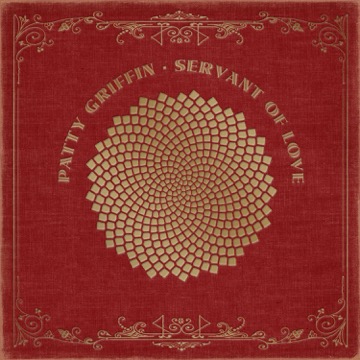
Album review: Servant of Love by Patty Griffin

Somewhere in the universe there is a law of physics which states that Patty Griffin must always create wonderful albums. Perhaps, in its simplest form, it looks like this:
Patty Griffin + songwriting = joy
Or this:
Patty Griffin + singing + creativity = perfection

Regardless of the equation, the newly released Servant of Love, Griffin's tenth album, is the proof. Over the course of Griffin's career, during which she has mostly released music that she's written herself (the exception being Downtown Church, which was mostly comprised of songs written by others, with some jewels by Griffin), she has demonstrated that each new album is a consolidation of and progression from her previous work. In this way her work is not only rewarding for long-time fans but also a gift for new listeners, who are coming across a mature, thoughtful, self-aware and educated artist no matter which album they pick up.

Servant of Love contains evidence of Griffin's country/Americana roots (although 'Americana' has always seemed too limiting a term for what she does – no one genre can contain her) as well as blues, jazz and African influences. This pedigree serves the songs rather than the other way around.

Griffin has the gift of being able to create songs of exquisite poignancy – the title song of this album amongst them, as well as 'Rider of Days' and 'Shine a Different Way'; sometimes I think that the sound of heartbreak is Patty Griffin's voice. Yet she can also deliver songs of stomping, driving rhythms that wouldn't be out of place in a hootenanny ('Gunpowder', 'There Isn't One Way'), or songs that sound like she's about to round you up and teach you a lesson ('Hurt a Little While'). She doesn't tell stories so much as create worlds, and the collection of those worlds is the universe that contains that aforementioned law of physics. Each album of hers feels like a benediction. Servant of Love is the latest, and we are fortunate to have it. 

Servant of Love is out now through Cooking Vinyl Australia.

Monday, September 28, 2015

Sara Storer headlines the Murwillumbah Country Roots Festival 2-5 October

The inaugural Murwillumbah Country Roots Festival takes place this long weekend on the New South Wales north coast. Organised by local country music artist Lou Bradley, the festival is headlined by Kasey Chambers, Sara Storer, The Audreys and Archie Roach, with over 60 all-Australian acts taking part across four stages. Late last week I had the chance to chat to Sara Storer about the festival - which also features her brother Greg. For the full line-up and other details, visit www.MCRFest.com.


When did you sign on to the festival?
Last year I remember [organiser] Lou [Bradley] talking about whether I’d be keen to be a part of it and I said, ‘Absolutely.’ And I said, ‘Why don’t I bring my brother Greg Storer as well?’ We’re sort of like a package, which is great, because Greg’s heading up with his family, I’m heading up with mine, and it’s sort of turned into a family gig with all the kids, and everything’s going to be so much fun.

So when you say ‘all the kids’, are you pressing any of them into service?
Often I head off and say goodbye  and they’ve sort of got no idea – because they’re still so young – what I do. But they’re at a great age now – well, two of them – where they can come and watch and see what Mum does. My brother’s got four kids and I’ve got four. They’ll probably watch for about five seconds and then want to go and play in the dirt [laughs] and I don’t care anyway because I’m not looking after them – my husband has to do that.

Are you still living in the Territory?
No, we’ve moved. We’re down just out of Albury.

That makes a bit more sense, because I thought coming from the Territory would be a big commitment for the festival.
No, we’re not coming from Darwin any more. Too hard. And as much as the lifestyle’s pretty unique, living up there, it’s too far. We love Albury. Great people and it’s so central to both Sydney and Melbourne.

Quite a bit colder, though.
Yes. The blood hasn’t really thickened up yet either. It was freezing. We’re in this little farmhouse – there’s no insulation, the kids all whinging. I said, ‘This is what it was like in the olden days, kids, so just zip it’ [laughs].

Hopefully it will be a bit warmer in the north of New South Wales over the October long weekend. It might be wet though – it can sometimes rain a bit up that way.
Okay, there might be a bit of rain – thanks for that little tip, because I am hopeless at what to pack. We’re going to need a trailer, that’s the worrying thing. To put the kids in the trailer [laughs].

So you’re obviously planning to stay the length of the festival.
We’re going to try. I’m going to try to be there on the Saturday – my brother’s on the main stage that day. Then we’ve got Sunday off and of course we’ll do the festival thing. And then I’m not performing until the Monday night. So it’s really great. Normally you fly in and you fly out and you just don’t have time to see anything. So this has worked kind of as ‘I’m going to a festival’ – it’s a bit of both, so it’ll be great.

Does it mean – I’m just thinking from a technical point of view – that if you’re not singing until the Monday night and you’ve been seeing friends, talking to people at shows, so you’ve been shouting a bit, do you have to really think about how to save your voice?
I don’t have that problem. Because I write my own songs and sing, my voice is never pushed too hard because I sing naturally where my voice takes me. Whereas if I sing a cover, I get off stage and my throat really hurts – it’s a different melody and it probably pushes me a bit. But with my own stuff I’m pretty right – it’s not that hard on my throat. I’m not like a Jimmy Barnes – I’d love to [be], though. It would take a fair bit out of me. I do probably have to watch I don’t have late nights. Catching up with everyone, you have one too many and then you’ve got to do a pretty good job the next day, so you have to be careful of that one. Socialising.

Is there anyone in particular you’re looking forward to seeing perform?
Well, Kasey [Chambers] – I do love her music. We’re friends, but put that aside – I’ve got all her albums. I’m a bit of a fan. So I’m looking forward to Kasey. And I love Mustered Courage. They’re just constantly on in the car, so I’ll be able to sing along. Not where they could see me – because that would be quite embarrassing.

They might be quite pleased, though, if you wanted to join them for a number.
[Laughs] Maybe. Or maybe they might tell me to get off! I have jumped up with [them] at Tamworth. It was after the [Golden Guitar] awards – it was on the Sunday. The last Sunday in Tamworth is the day I go and just have a great time – catch up with people. So I jumped up and sang a couple of songs with them. They’re just awesome.

You’ve also just given a tip for anyone heading to Tamworth, to hang around for the Sunday in case there are any interesting collaborations going on.
Oh, absolutely. And Shane Howard – he’s just an unbelievable songwriter – can’t wait to see him [at Murwillumbah]. Archie Roach is on. It’s going to be terrific.

I noted that the festival is being MC’d by Ben Sorensen but also by Buddy Goode – and I have to say that makes me a little afraid for all of you!
[laughs] You don’t sit down in the front row, maybe.

Yes. But I do think it will be highly entertaining.
Oh, he’s hilarious. For ages I didn’t know who he was and then I worked out how it was and I was kind of embarrassed that I didn’t know.

I still don’t know who he is.
Oh, okay. Well, that’s what happens, I guess, when you’re having a family – you sort of get left behind a bit and you don’t catch up on all this stuff. It’ll be good. It’ll be an awesome festival. Can’t wait.

And the festival is all Australian – how important is that to you?
I guess that is a great thing. Music’s music – it doesn’t  matter where it comes from – but it’s kinda cool in that it showcases our talents here in Australia and I think that’s a great idea. I love that stance – all Aussie. Great. Bring it on.

I should have said this at the top when you mentioned Lou, but Lou is one of these quiet figures who seems to know everyone, so you must have known her for quite a while.
Lou came on the country music scene – I was sort of new as well. She was probably a couple of years after me. And there was talk in the town of this Lou Bradley. And it’s always great – we always need some new talent in country music world. So I went and had a look and she’s just a brilliant songwriter and entertainer, and we became mates. We’ve done many gigs together and last year she rang me and asked if I wanted to be a part of [the festival] and I said, ‘Yes! Make sure I’m counted.’ So I think she’s gone through and picked all the music she likes – it’s pretty much who she’d have in her back yard. And I was just so lucky I was picked – otherwise I’d be ringing her saying, ‘Hey, where’s my name?’

Talking of festivals: what are your Tamworth plans and are you working on a new album?
Well, I am. I’m recording it within the next few months, so it will be completed by the end of the year to release my first single and video clip at Tamworth next year. And I’ve got two shows at Tamworth – one is my own show at Blazes and the second gig is the gig that I absolutely love, where I pair up with my brother, Greg Storer. We call it the Kitchen Sessions and we’re doing that at the pub on the Saturday.

Sunday, September 13, 2015

Lee Kernaghan - The Songs & the Stories in Concert

No doubt someone has called Lee Kernaghan 'the hardest-working man in country music' - and that would be because it's true. He's on tour now with undoubtedly the hardest-working band in country music, the Wolfe Brothers, bringing The Songs & The Stories to towns around Australia. I spoke to Lee a few days ago about his epic end to 2015. 


Lee, I’m worried that you’re not working hard enough.
[laughs] It’s a labour of love. I’m lovin’ it.

 And it’s a massive tour – you’re going all over the place. This is what you do – you tour a lot – but I’m really curious as to how you keep your energy levels up.
I’ve got a few secrets. I take the Ab Roller out – work on the abs. I go to the gym as much as I can. I have a detox that I take – wellness greens and vitamin C, fibre. I have that every morning. I just try to eat good food as much as I can, drink as much water as I can. And a bit of Fireball whisky to wash it all down at night.

[laughs] And how about your voice? I know some of the advice to singers is ‘don’t talk the day of a gig’ but you’re doing media and all sorts of things. How do you protect your voice?
I try not to do a whole lot of interviews on the day of the gig, so just relax it a bit. And that Fireball whisky does work wonders on the vocal cords.

In this show you’re doing an acoustic first half, so that puts your voice even more on show. This is the first time you’ve done acoustic on a tour like this, so what prompted that decision?
To do something that I haven’t done before. And this whole show really has been a perfect example of heading into the great unknown. I’ve never been as nervous as I was before the first show in Townsville just last week. I had no idea how people would react to the show but it became very evident very fast that we were all a part of something much bigger than us, and it’s been an absolute privilege and an honour to bring these songs and stories to life on stage.

The first half is songs from albums you’ve done that aren’t Spirit of the Anzacs and the second half is Anzacs songs. How do you choose a set list, given that your career has been so extensive?
We just have a bit of a yarn, the boys in the band and I. We knocked it around. We rehearsed for a couple of weeks and then decided which ones we wanted to do live. It’s unplugged and semi-acoustic so the boys all bunch up close together on stage and I’m loving that part of the show. It’s a lot of fun. Christie Lamb joins us as well, singing harmony vocals, mandolin – she’s a brilliant piano player, acoustic guitar player. She stars in the second half of the show as well, doing some solo songs. We’ve also got Jon English’s son – the great rock legend Jon English. His son Jonathan English is in the band. So it’s a brilliant bunch of musicians.

And how are those Wolfe Brothers coping with acoustic?
I don’t think they’ve ever sounded better. It really showcases the boys’ vocals and their musical ability and musicianship. They’re knocking it out of the park.

They’ve possibly surprised themselves with that, because they’re so used to playing loud.
That’s right. We all have. Even for me, I [usually] strap up, turn on and go. And there is that element in the show as well, but there’s a whole lot more to it.

It would be really easy for someone in your position, Lee, to think, What I’ve been doing has been working well so far – I’ll just keep doing it, and you talked about being nervous before that Townsville show. But I get the feeling that you like challenges – you like to keep moving forward as an artist, and that relentless curiosity about what’s next is partly what keeps your audience moving with you.
I think that this show, the fact that everyone involved in it was challenged to take it to the next level, it’s opened up some new doors and set a new template for how I will tour in the future. Using the screen and the theatrical lighting is definitely something I want to continue doing.

And what about the acoustic part of it – will you incorporate more of that in future?
Yes, I really do enjoy getting out there and doing it in that mode. It’s fun and it’s different, but I love plugging in electric and the bigger production stuff that comes in the second half.

How long is this show?
It’s about two and a half hours. The show starts at 8 and ends about 10.30 with a 20-minute intermission.

The reason why I ask is so that people don’t look at the ticket time and think they can stroll in late because the show doesn’t start right then – as can happen!
No, the quality’s on from the word go. There’s no filler [laughs].

Do you keep going back to the same venues on these tours or do you try to pick some different towns?
My management company generally chooses which towns and venues to play. We are limited – we need to have certain capacities in order to cover the cost of taking a production of this size into a town. That’s how it works, although sometimes I think they just stand in front of a map of Australia and throw darts and say, ‘Okay, we’ll do that’ [laughs].

For the full list of tour dates, visit www.leekernaghan.com
 Spirit of the Anzacs is out now.